













When can you trade forex, what happens at weekends, and why does the MT4 clock not match your local time?
Three facts cover it: forex runs almost 24 hours on weekdays, it closes at weekends, and the hours shift by one hour with US daylight saving time. In 2026, US daylight saving ran from 8 March to 1 November.
We put session times, broker server times and gold breaks side by side from official pages. By the end you can work out your own account's trading hours in Japan time.
Short answer: forex trades almost 24 hours on weekdays
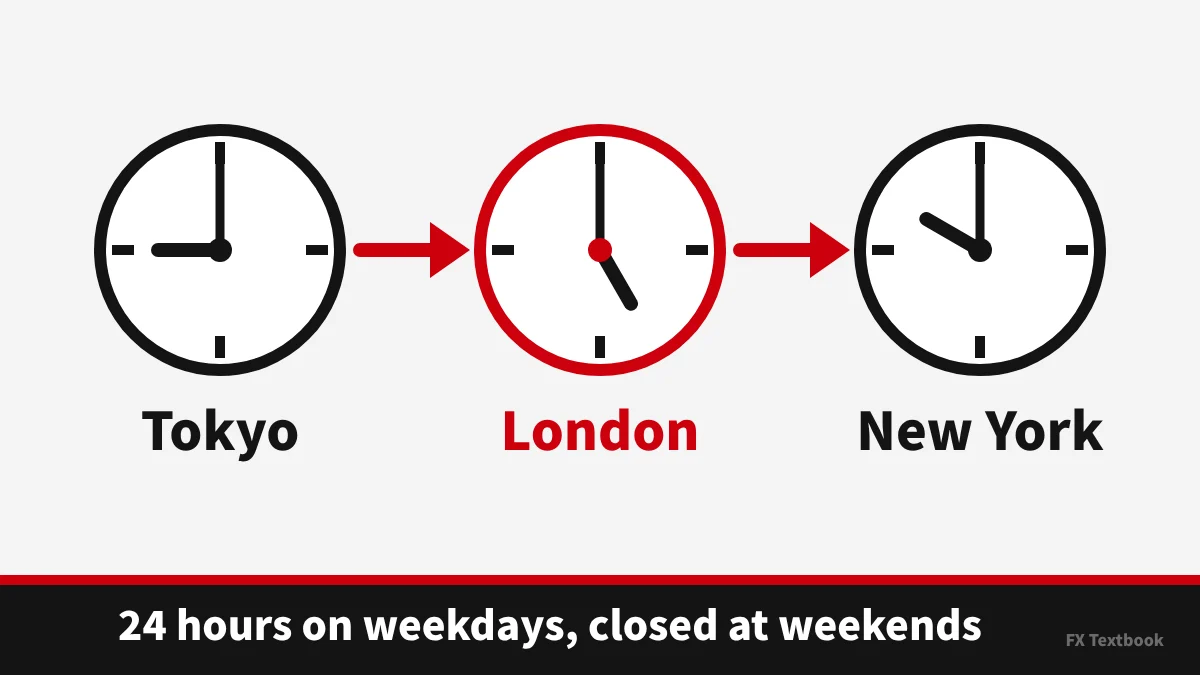
- Forex trades almost 24 hours a day from Monday morning to early Saturday (Japan time)
- It is closed from early Saturday to Monday morning, and hours change on holidays
- Hours shift by one hour in Japan time with US daylight saving time
- The MT4/MT5 clock shows broker server time, 6 to 9 hours behind Japan time
- Gold and stock indices keep different hours from currency pairs
| Winter (JST) | Summer (JST) | |
|---|---|---|
| Weekly open (XS, FX) | Mon 7:05 | Mon 6:05 |
| Weekly close (XS, FX) | Sat 6:55 | Sat 5:55 |
| Weekly open (Exness, FX) | Mon 7:05 | Mon 6:05 |
| Weekly close (Exness, FX) | Sat 6:59 | Sat 5:59 |
Opening and closing times differ by a few minutes from broker to broker. You can confirm your own account's times on the Specification screen shown later.
In Japan time, the trading week starts on Monday morning and ends on Saturday morning. Saturday 7:00 in Japan (winter) is still 17:00 on Friday in New York.
Why forex trades 24 hours: a market without an exchange
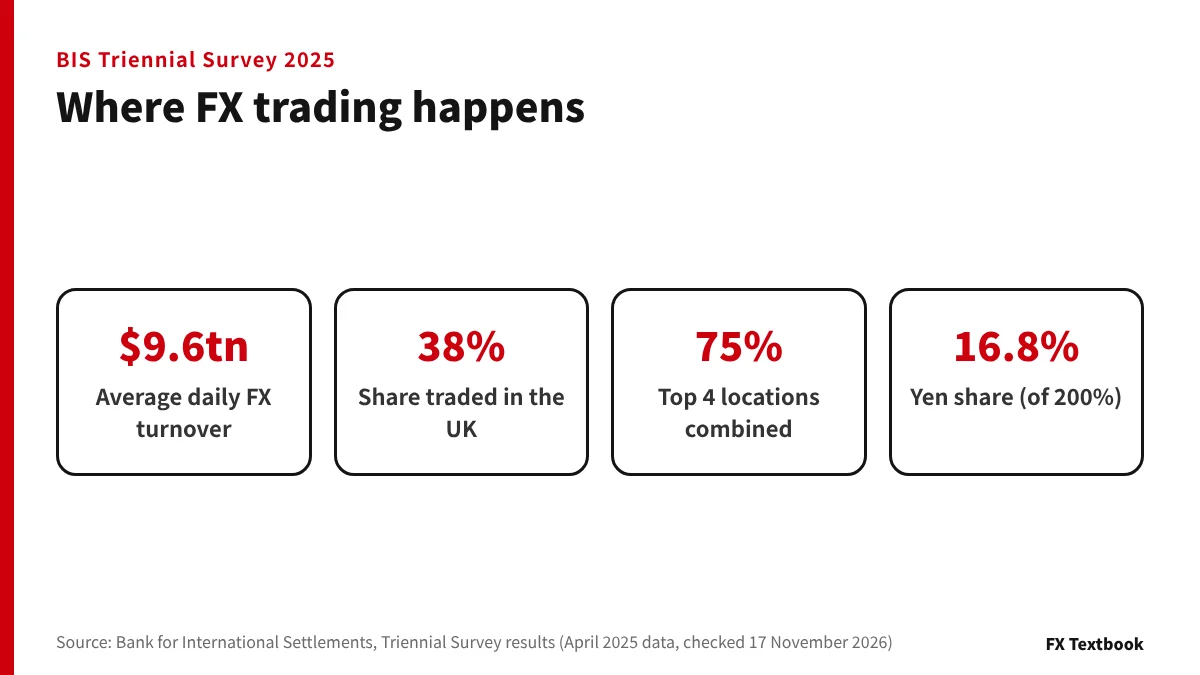
The Bank of Japan explains that the foreign exchange market is not a building. It is the whole set of trades, most of them done by phone or electronically.
There is no opening or closing bell as on a stock exchange. London joins as Tokyo's day ends, New York joins during London's afternoon, and trading carries on through the week.
| Item | Figure (April 2025) |
|---|---|
| Average daily global FX turnover | USD 9.6 trillion |
| UK share of trading | 38% |
| UK, US, Singapore and Hong Kong combined | 75% |
| Share of trades with the US dollar on one side | 89% |
| Japanese yen share (out of 200%) | 16.8% |
Each trade involves two currencies, so BIS currency shares sum to 200%. The yen's 16.8% ranks third after the US dollar and the euro.
The Bank of Japan splits trading into customer business between individuals or companies and financial institutions, and interbank trading between institutions. Retail traders using an FX broker are on the customer side.
That is why your broker sets the hours you can actually trade. Even with the market running 24 hours, you can only trade within your broker's hours and breaks.
Tokyo, London and New York sessions in Japan time
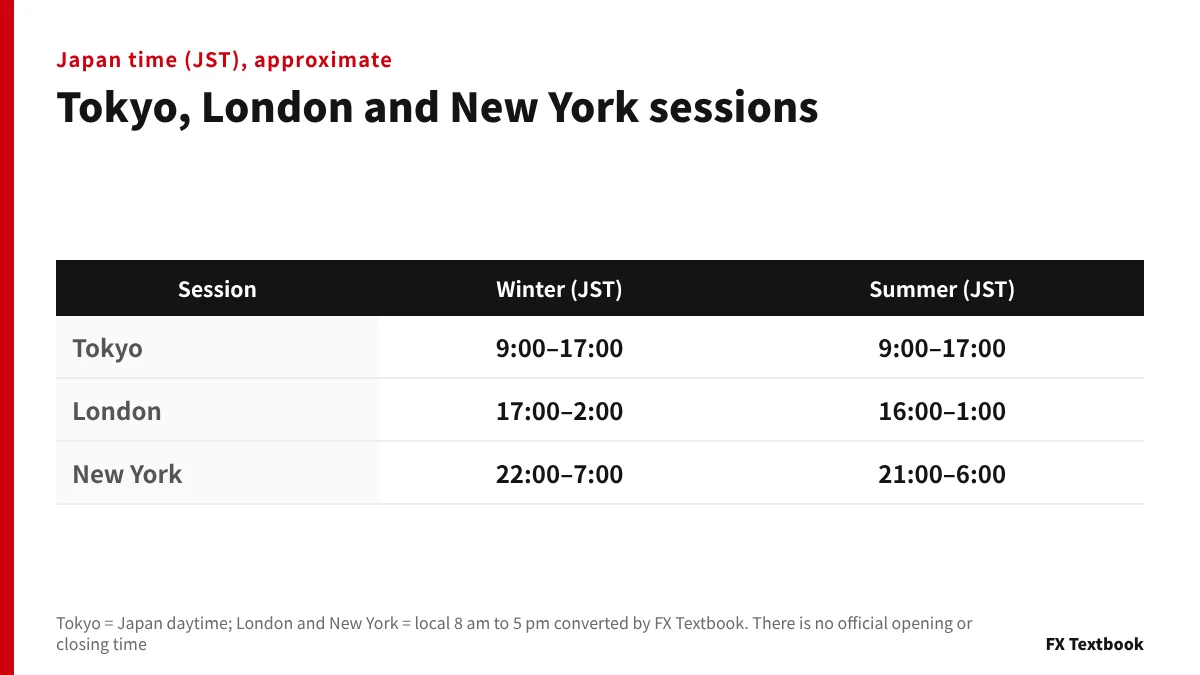
The Bank of Japan describes the Tokyo FX market as trading by Tokyo-based participants during Japan's daytime. London and New York sessions likewise centre on local daytime.
For Tokyo the table shows Japan daytime; for London and New York it converts local 8 am to 5 pm into Japan time. With no official opening time, other sources may show figures that differ by about an hour.
| Session | Winter | Summer | Gap to Japan |
|---|---|---|---|
| Tokyo | 9:00–17:00 | 9:00–17:00 | None (Japan has no DST) |
| London | 17:00–2:00 | 16:00–1:00 | 9 hours winter, 8 summer |
| New York | 22:00–7:00 | 21:00–6:00 | 14 hours winter, 13 summer |
On the clock, the London and New York ranges in the table overlap from 22:00 to 2:00 JST in winter and from 21:00 to 1:00 in summer. Tokyo and London touch only briefly around 17:00. This guide does not cover which hours to trade.
Australia moves to daylight saving in the opposite season. The Exness help centre lists the 2026 changes as 5 April and 4 October.
Forex daylight saving and winter time: 2026 dates
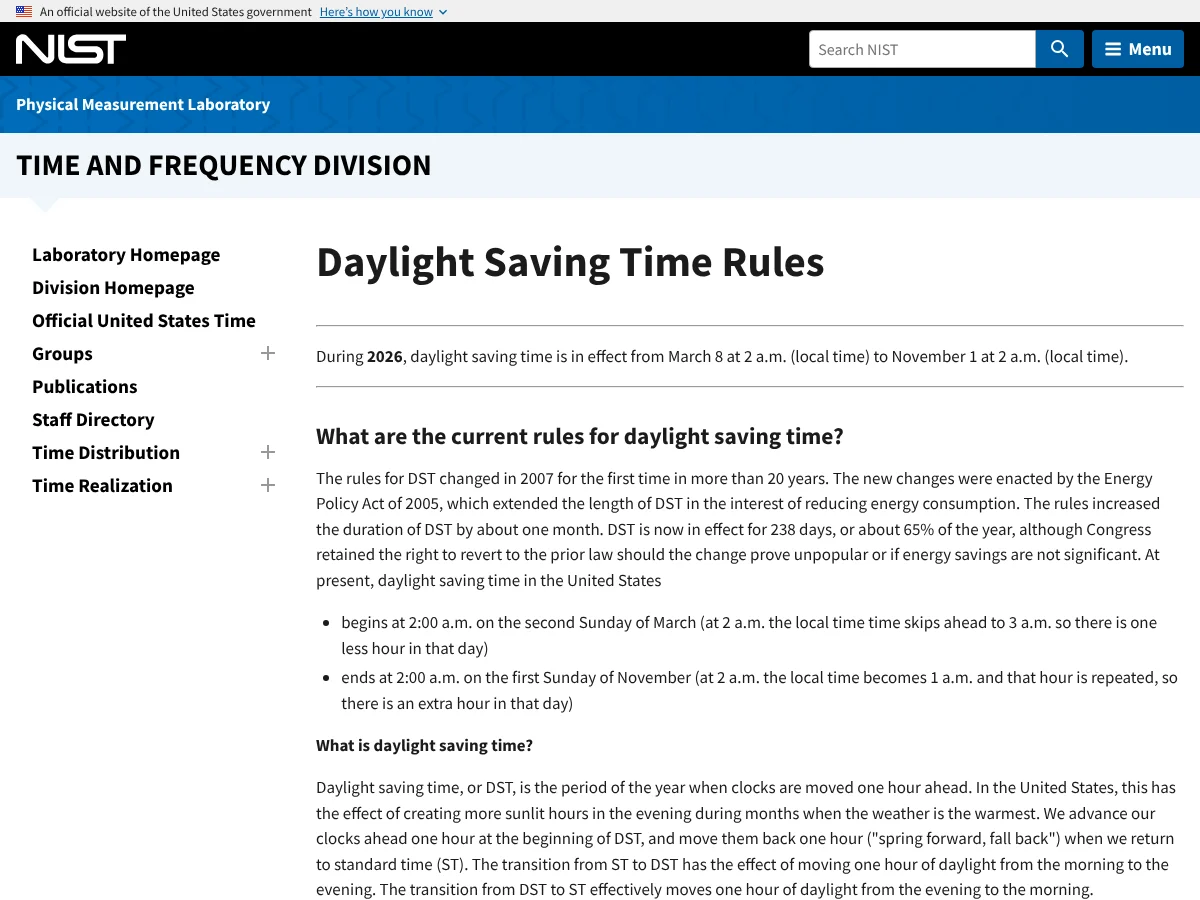
US daylight saving runs from the second Sunday in March to the first Sunday in November. In 2026 it started on 8 March and ended on 1 November (NIST).
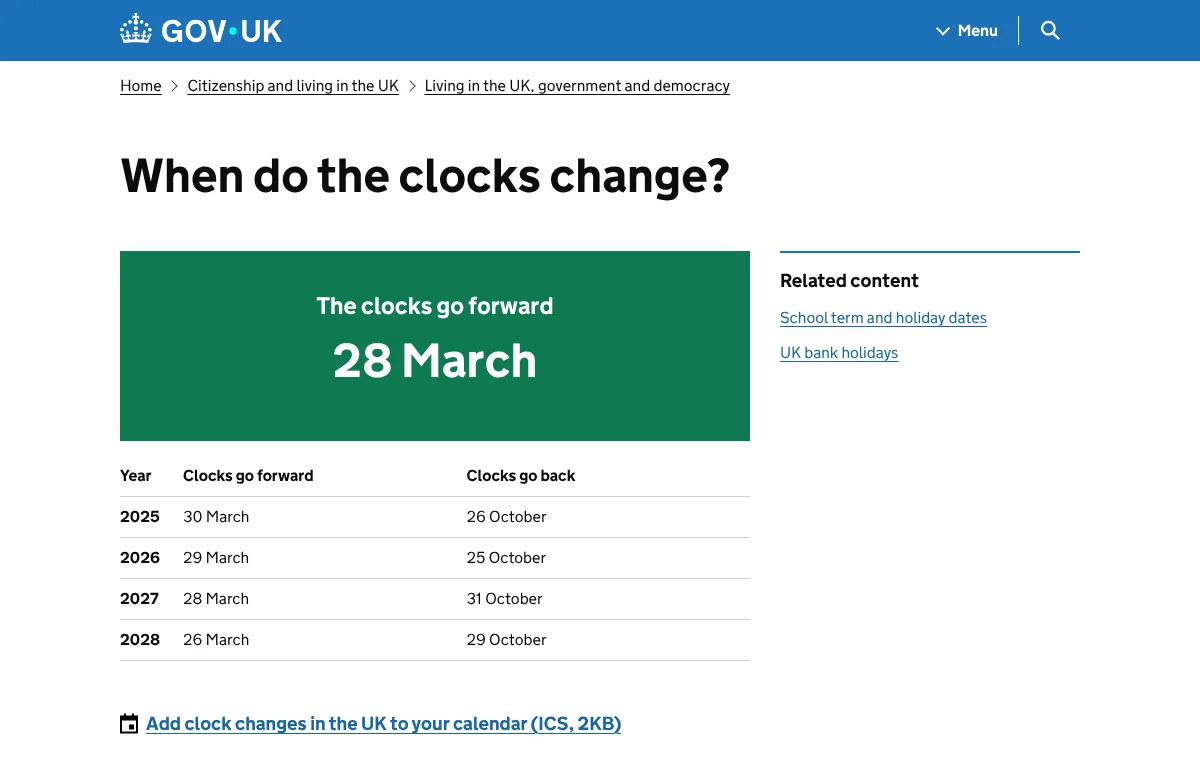
UK summer time runs from the last Sunday in March to the last Sunday in October: 29 March and 25 October in 2026 (GOV.UK). The two countries switch on different dates.
| Period (2026) | New York | London | What happens in Japan time |
|---|---|---|---|
| 1 Jan – 7 Mar | Winter | Winter | Winter table applies |
| 8 Mar – 28 Mar | Summer | Winter | Only New York moves 1 hour earlier |
| 29 Mar – 24 Oct | Summer | Summer | Summer table applies |
| 25 Oct – 31 Oct | Summer | Winter | Only London moves 1 hour later |
| 1 Nov – 31 Dec | Winter | Winter | Winter table applies |
XS and Axi state that their server time switches with US daylight saving. During the roughly four weeks when only the UK differs, their server clocks still follow the US.
In 2027 the US is due to switch on 14 March and the UK on 28 March. The US date is counted from the second-Sunday rule.
What happens in the switch week (1 November 2026 example)
| FX (Exness) | During DST (UTC) | From 1 Nov (UTC) | Japan time |
|---|---|---|---|
| Weekly open | Sun 21:05 | Sun 22:05 | Mon 6:05 → 7:05 |
| Weekly close | Fri 20:59 | Fri 21:59 | Sat 5:59 → 6:59 |
Because Exness runs on UTC, the displayed times move by one hour. In Japan time, the weekly open and close both moved one hour later.
Can you trade forex at weekends? Closures and year-end
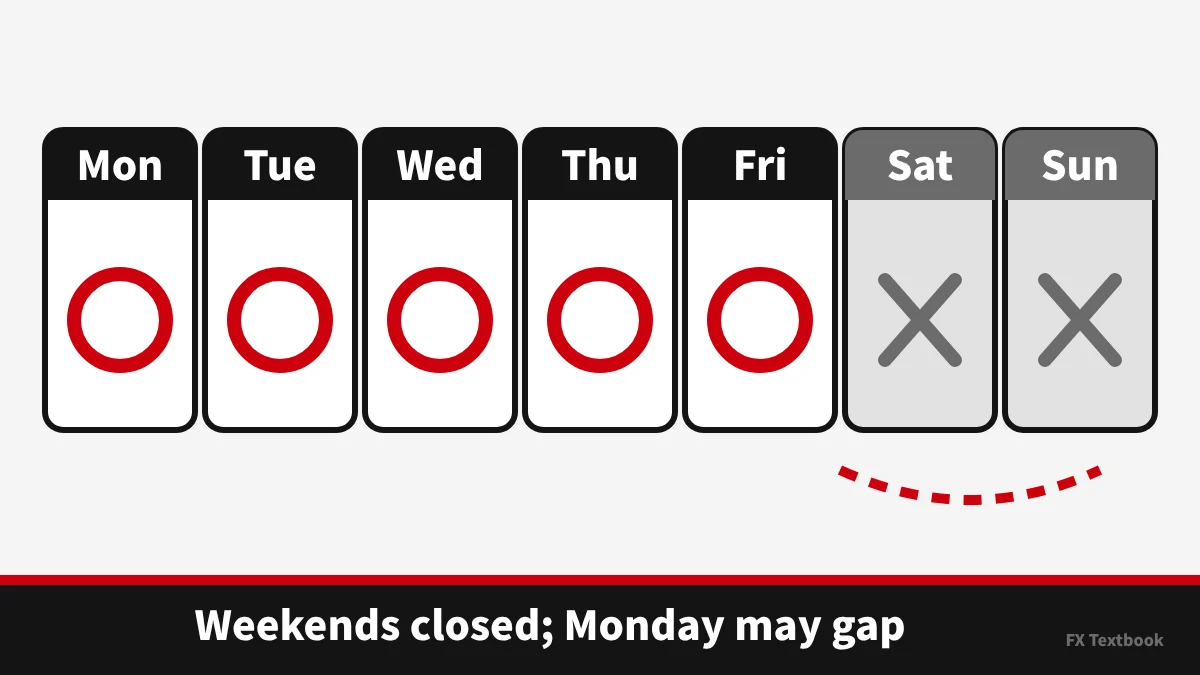
Currency pairs cannot be traded from early Saturday to Monday morning, Japan time. Positions held over the weekend stay open until Monday's open.
After major weekend news, Monday's first price can open away from Friday's close. This is called a gap. A stop order may then fill at a different price from the one you set.
Holiday and year-end hours change by symbol
| Date (2026) | Holiday | Official notice |
|---|---|---|
| Thu 26 Nov | US Thanksgiving | XS: FX normal hours; gold closes at 21:30 server time |
| Fri 27 Nov | Day after Thanksgiving | XS: FX normal hours; gold closes at 21:45 |
| Fri 25 Dec | Christmas | Listed in Exness holiday schedule |
| Mon 28 Dec | Boxing Day (substitute) | Listed in Exness holiday schedule |
| Thu 31 Dec | Bank holiday | Listed in Exness holiday schedule |
In the XS Thanksgiving notice, FX keeps normal hours while gold and energy close early. Exness says it emails holiday hours for each instrument.
Weekend swap is usually charged on Wednesday
There is no trading at weekends, but positions held over the weekend still incur swap. The weekend days are charged together on one weekday.
| Broker | Day of triple swap | Source |
|---|---|---|
| Axi | Wednesday (FX and XAUUSD) | MT4/MT5 product schedule |
| Exness | Wednesday (major and minor pairs) | Help centre, Forex |
XS lists cryptocurrencies as open all year except during server maintenance. DecodeFX trades all symbols on weekdays only and says weekend crypto CFD trading is in preparation.
Converting MT4/MT5 server time to Japan time
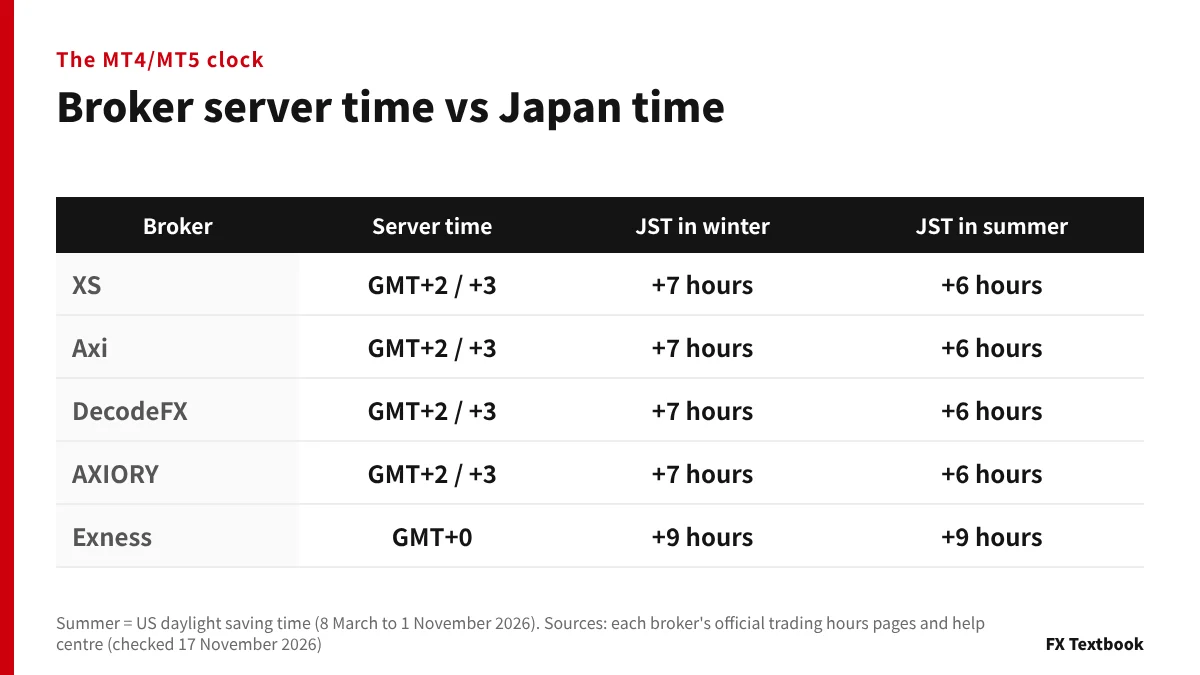
Charts and trade history in MT4/MT5 show the broker's server time, not Japan time. The Exness help centre says the MetaTrader time zone cannot be changed.
| Broker | Official server time | To get Japan time |
|---|---|---|
| XS | GMT+2 standard, GMT+3 during US daylight saving | +7 hours winter, +6 summer |
| Axi | GMT+3 during New York DST, otherwise GMT+2 | +7 hours winter, +6 summer |
| DecodeFX | GMT+2 winter, GMT+3 summer | +7 hours winter, +6 summer |
| AXIORY | GMT+3 summer, GMT+2 winter | +7 hours winter, +6 summer |
| Exness | UTC+0 | +9 hours all year |
- 01Check the season
See whether the US is on daylight saving time (8 March to 1 November in 2026).
- 02Add the hours
Add 7 hours for a GMT+2 broker and 6 hours for GMT+3. Server time 23:00 is 6:00 Japan time in winter.
- 03Watch the date
If the result passes 24:00 it is the next day. Friday 23:55 server time is early Saturday in Japan.
AXIORY's FAQ gives the example of MT4 showing 10:00, which is 16:00 Japan time in summer and 17:00 in winter. Daily candles close at midnight server time.
Daily candles split at different times
Daily candles split at midnight server time, so with a GMT+2 broker a new daily candle starts at 7:00 Japan time in winter. With a UTC broker such as Exness, the split is at 9:00 Japan time.
At Exness, the FX week opens at 22:05 UTC on Sunday, so the first two hours or so carry a Sunday date. Daily candles look different between brokers because the split time differs.
The MT4/MT5 clock itself cannot be changed. AXIORY's FAQ points to an indicator that displays Japan time.
Gold and index trading hours differ by symbol
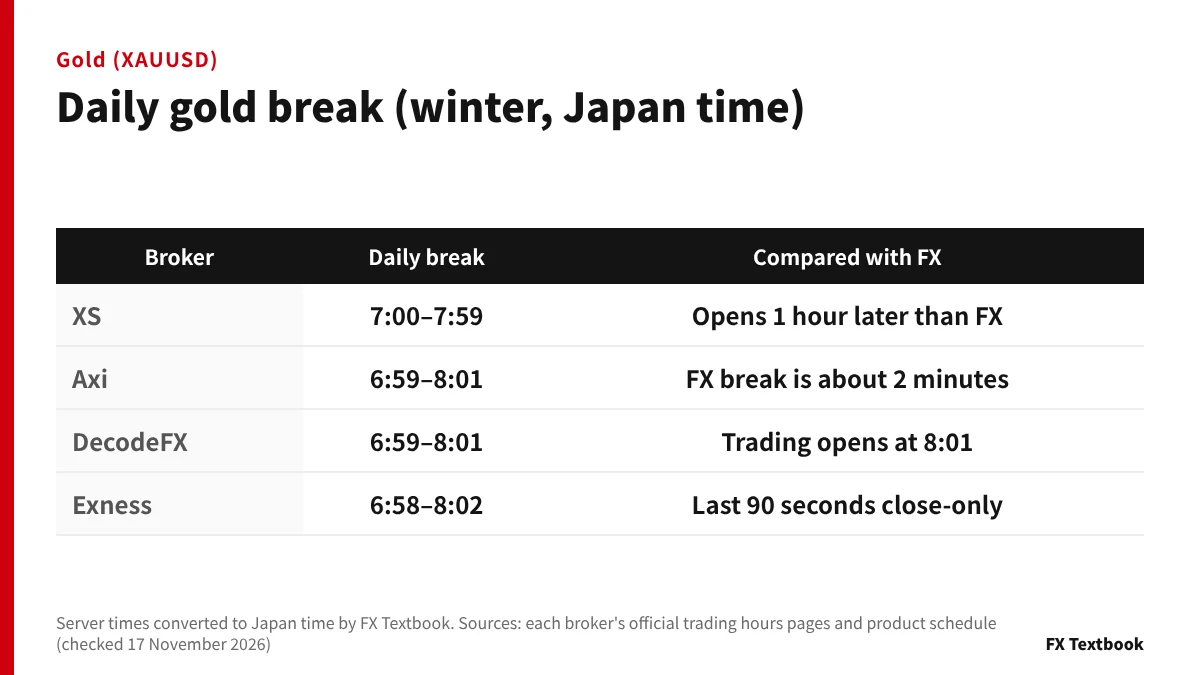
Gold (XAUUSD) pauses for about an hour every day, unlike currency pairs. At XS, FX opens at 0:05 server time on Monday and metals open at 1:05.
Axi's product schedule shows a daily EURUSD break of 23:59 to 0:01, about two minutes. XAUUSD breaks from 23:59 to 1:01, about an hour.
| Symbol (XS) | Server time | Winter JST |
|---|---|---|
| All currency pairs | Mon 0:05 – Fri 23:55 | Mon 7:05 – Sat 6:55 |
| Metals (XAU, XAG etc.) | Mon 1:05 – Fri 23:55 (daily break 0:00–0:59) | Daily break 7:00–7:59 |
| JP225 | Mon–Fri 1:00–23:59 | 8:00–6:59 next day |
| UK100 | Mon–Fri 3:00–22:59 | 10:00–5:59 next day |
| HK50 | Mon–Fri 4:15–7:00, 8:00–11:30, 12:15–22:00 | Two breaks during the day |
Axi's product schedule notes that daylight saving changes outside the US also shift index hours. Some indices, such as HK50, pause at midday.
Even regular hours can change. Exness has announced that from 22 November 2026, UKOIL (Brent crude) will open on Sunday at 23:05 UTC instead of Monday at 01:10.
How to check on the official screen: MT5 Specification sessions
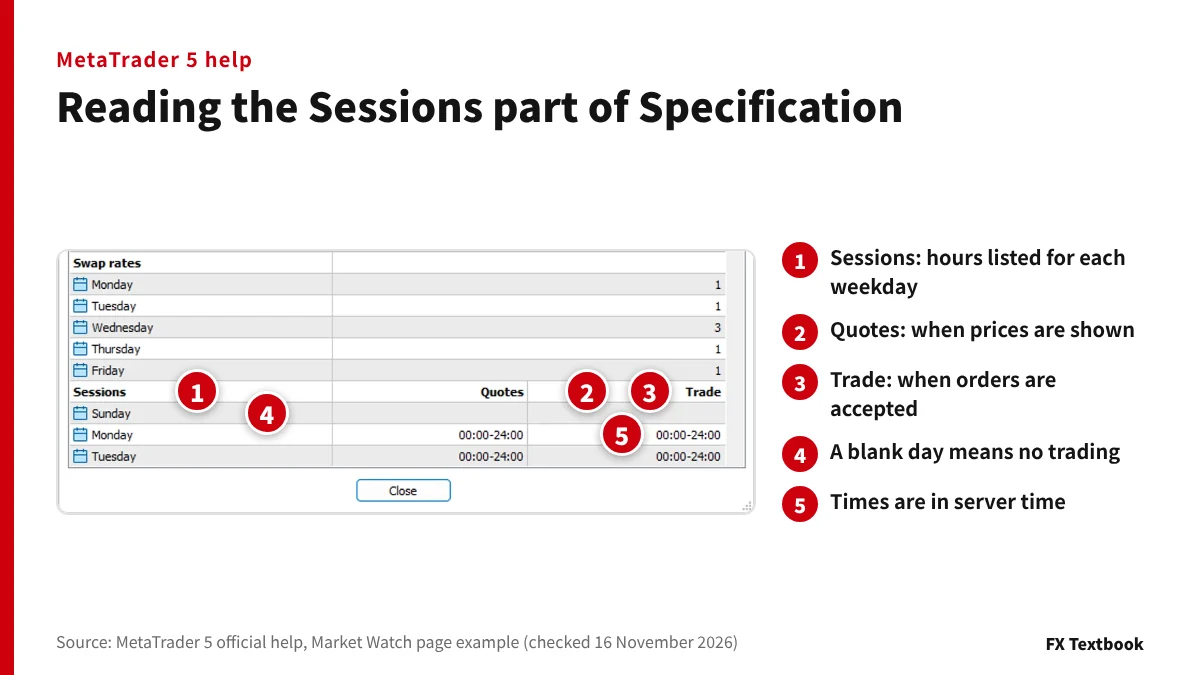
The MT5 help explains that right-clicking a symbol in Market Watch and choosing Specification opens the contract details. The Sessions part near the bottom lists hours for each weekday.
- 01Open Market Watch
Show Market Watch from the View menu in MT5 and find the symbol you want to check.
- 02Open Specification
Right-click the symbol name and choose Specification.
- 03Read Sessions
Quotes shows when prices are displayed and Trade shows when orders are accepted. Times are server time, so convert them as in the previous section.
The image is the help page's EURUSD example, with Monday at 00:00–24:00 and Sunday left blank. Contents differ by broker, so open it on your own account.
MT4 vs MT5: differences and basic use
Where brokers publish trading hours
| Broker | Official page | What it shows |
|---|---|---|
| XS | Trading hours | Normal hours, upcoming closures, notices and higher margin (HMR) |
| Axi | Product schedule (PDF) | Open, close and break times by symbol |
| DecodeFX | Trading hours | Hours by symbol in Japan time for winter and summer |
| AXIORY | Trading hours and FAQ | Pause times and links to product pages |
| Exness | Help centre: instrument trading hours | Schedule you can view in your chosen time zone |
The Exness schedule changes with the time zone you select. Choose Japan time and you can skip the conversion.
Times to check alongside trading hours: data releases and rollover
Economic data release times and how to read them are covered in our guide to economic indicators. This guide sticks to checking when the market is open.
- US data release times in Japan time also shift by one hour with daylight saving
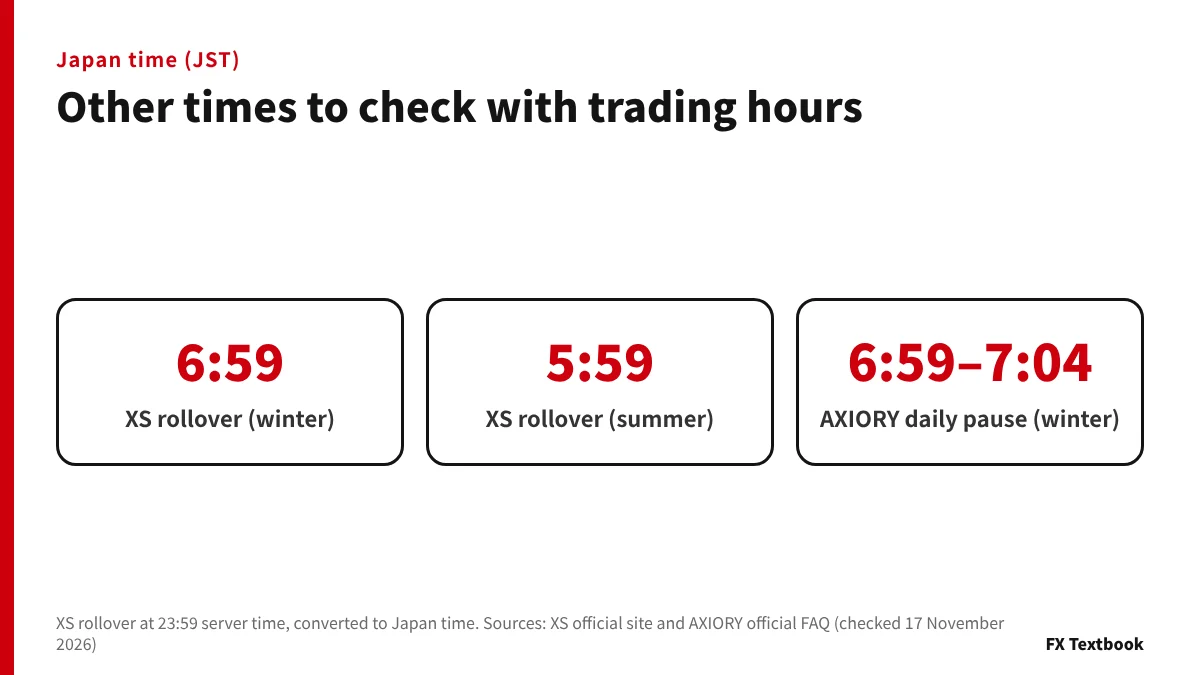
- The XS rollover (day change) is at 23:59 server time
- AXIORY pauses trading around the rollover
| Broker | Daily FX pause (JST) | Weekend |
|---|---|---|
| AXIORY (winter) | Tue–Fri 6:59–7:04 | Sat 6:58 – Mon 7:04 |
| AXIORY (summer) | Tue–Fri 5:59–6:04 | Sat 5:58 – Mon 6:04 |
The rollover time decides whether swap is applied. At XS, positions open at 23:59 server time are rolled over.
Our conclusion: the order to check trading hours
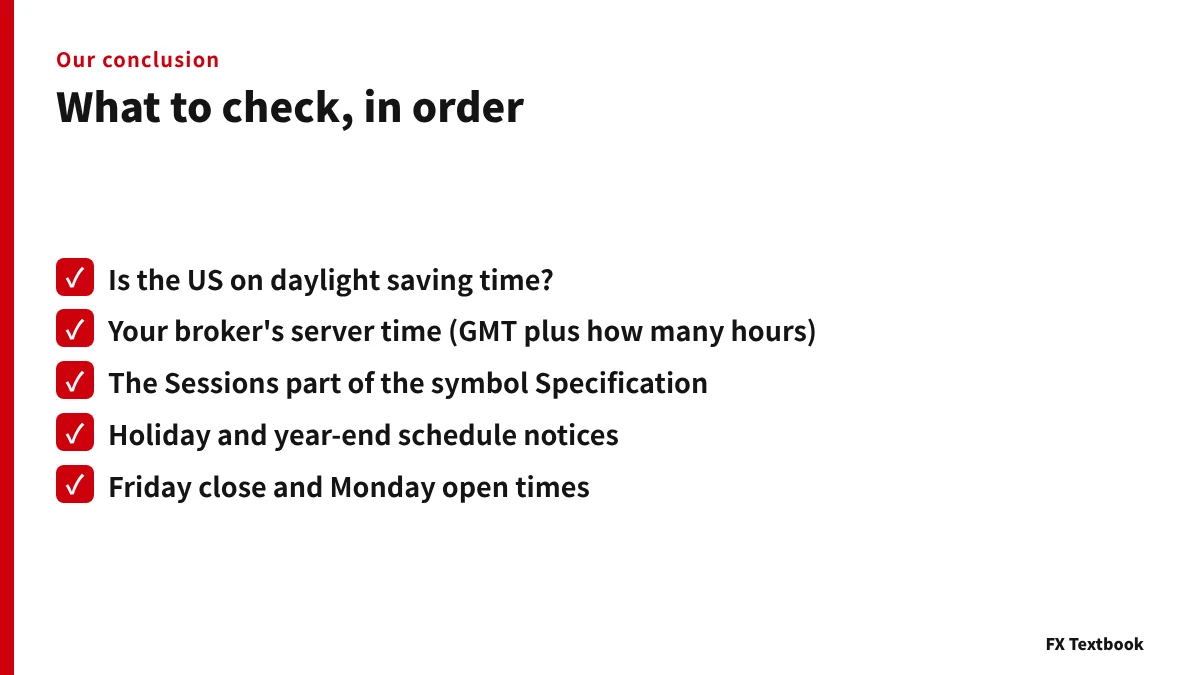
If you trade only currency pairs, two facts are enough: whether the US is on daylight saving, and your broker's server time. If you also trade gold or indices, check the symbol Specification and holiday notices too.
- In winter, roughly Monday 7:00 to Saturday 7:00 Japan time; one hour earlier in summer
- For GMT+2/+3 brokers, add 7 or 6 hours to get Japan time
- Exness uses GMT+0, so add 9 hours all year
FX and CFDs are leveraged products, and prices can move by more than the funds you deposit. Weekend gaps and early holiday closes can stop you closing at the price you expected.
Frequently asked questions
Q. Can you trade forex at weekends?
A. Currency pairs cannot be traded at weekends. In winter they close early Saturday morning Japan time and reopen around 7:00 on Monday. Some brokers offer symbols such as crypto CFDs at weekends.
Q. What are forex market hours in Japan time?
A. In winter, roughly Monday 7:00 to Saturday 7:00; in summer one hour earlier, Monday 6:00 to Saturday 6:00. XS FX runs from Monday 7:05 to Saturday 6:55 in winter. Times differ by a few minutes per broker.
Q. When does forex switch between summer and winter time?
A. Most brokers follow US daylight saving, from the second Sunday in March to the first Sunday in November. In 2026 that was 8 March to 1 November. In 2027 summer time is due to start on 14 March.
Q. Why does the MT4 clock differ from Japan time?
A. MT4 and MT5 show the broker's server time. For a GMT+2 broker, Japan time is 7 hours ahead; for GMT+3, 6 hours ahead. Exness runs its servers on GMT+0.
Q. Are there times on weekdays when you cannot trade forex?
A. Yes. Some brokers pause briefly around the daily rollover. AXIORY stops trading from 6:59 to 7:04 Japan time, Tuesday to Friday, in winter. Gold also pauses for about an hour every day.
Q. What hours can you trade gold?
A. Gold pauses for about an hour every day. At XS in winter, the break is 7:00 to 7:59 Japan time. The time differs by broker, so check the symbol Specification in MT5.
Q. Can you trade forex at Christmas and New Year?
A. On holidays, hours are shortened or closed depending on the symbol. The Exness 2026 holiday list includes 25, 28 and 31 December. Check your broker's notice for the exact hours.
Q. What are the Tokyo, London and New York sessions in Japan time?
A. There is no fixed definition; the names refer to each centre's daytime. As a guide, Tokyo is 9:00 to 17:00, London 17:00 to 2:00 and New York 22:00 to 7:00 in winter. In summer, London and New York move one hour earlier.
Sources and conditions
FX Textbook is edited from official platform documentation, broker-published information and applicable terms where available. Account conditions, services and rules can change. Confirm the current terms in the broker's registration flow before you act.
FX Textbook is an independent information site, not a broker or provider of personal investment advice. Forex and CFDs involve risk. You may lose some or all of your invested capital. No trading result is guaranteed.
NEXT STEP
Confirm the final hours in your account's Specification
Compare account types and trading platforms by broker.