
If you look for HYPE (Hyperliquid) in a Japanese exchange app, you will not find it. That leaves the question of where to buy it and in what order.
As of 7 November 2026, HYPE is not on the list of 113 crypto assets handled by members of the JVCEA, Japan's industry body. Public APIs show that MEXC, BingX and Bitunix list it for spot trading.
This page compares the three exchanges and walks through transfers, cashing out and tax, so you can decide for yourself.
How to buy HYPE: not on Japanese lists, spot on overseas exchanges
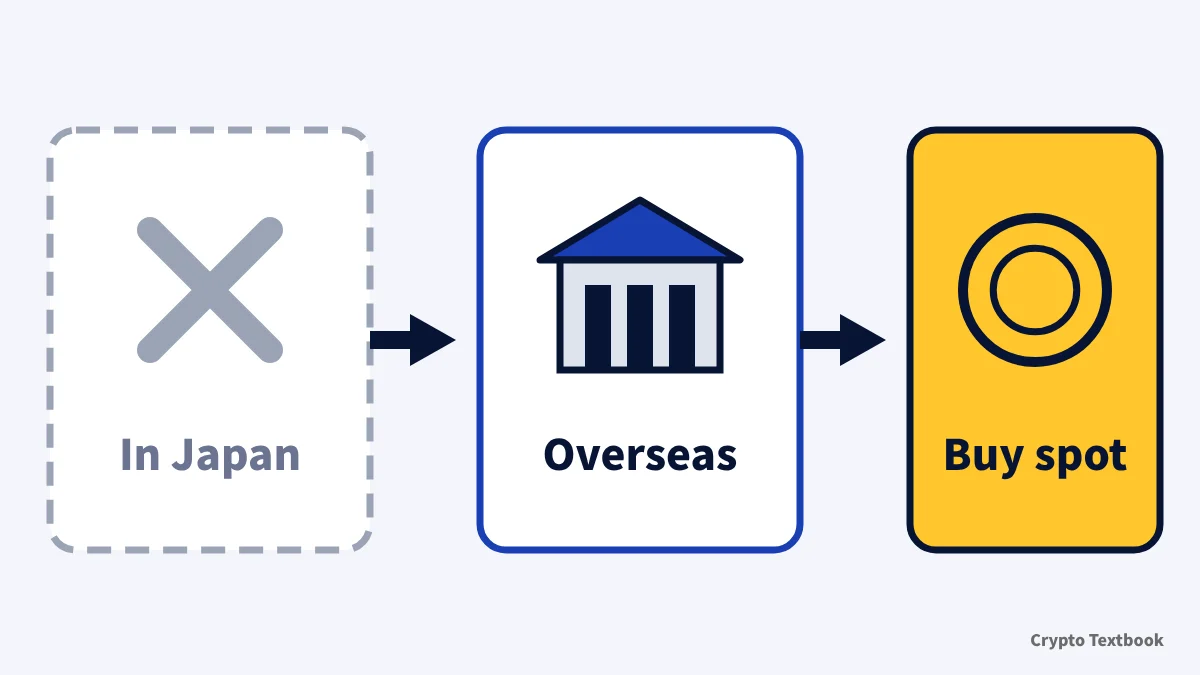
- Japan: HYPE is not on the JVCEA members' list of 113 crypto assets (updated 2 November 2026)
- Overseas: the public APIs of MEXC, BingX and Bitunix show HYPE/USDT open for spot trading (checked 7 November)
- Route: buy XRP or similar in Japan, send it overseas, swap to USDT, then buy HYPE
- Caution: none of the three is registered with Japan's Financial Services Agency, so Japanese user protection does not apply
- Price risk: crypto can fall sharply in a short time, and exchanges can stop handling a token
- Fakes: HYPER (Hyperlane) is a different token with a similar ticker. Check that the name says Hyperliquid
- Tax: gains from selling or swapping HYPE are, in principle, miscellaneous income
BingX's official page also offers HYPE futures. Leverage magnifies losses, so if you buy, use the spot market and limit yourself to money you can afford to lose.
What is Hyperliquid (HYPE)? Uses and supply from official sources
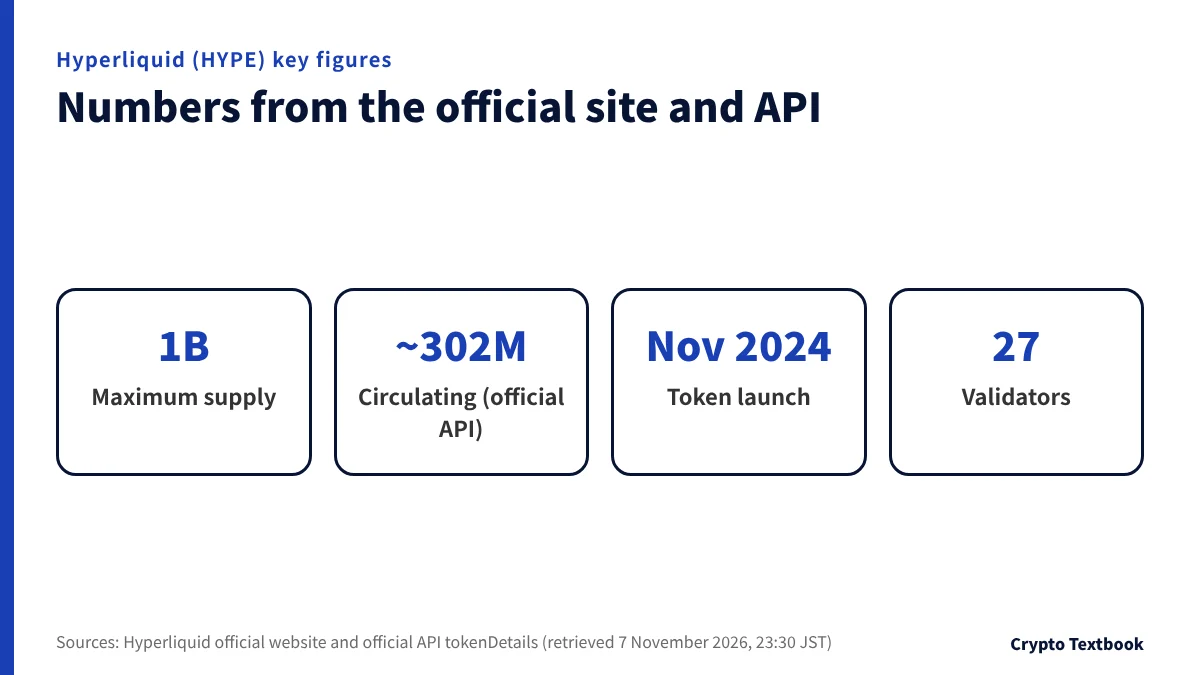
Hyperliquid is a layer 1 blockchain with built-in perpetual futures and spot exchanges. Its official website describes HYPE as the native token of that chain.
Every order and trade on the exchange is recorded on chain. The project describes the system as non-custodial, meaning it does not hold users' funds.
| Item | Official information |
|---|---|
| Maximum supply | 1 billion HYPE |
| Total supply | About 998.78 million HYPE (official API) |
| Circulating supply | About 301.82 million HYPE (official API) |
| Token launch | 29 November 2024 (official API record) |
| Protocol revenue | 99% goes to the Assistance Fund, and the HYPE it buys is burned |
※ Total and circulating supply are snapshot values that change daily with burns and distributions. We do not use them to judge the price.
| What HYPE is used for | Official description |
|---|---|
| Staking | Delegated to validators, who secure the network |
| Trading discounts | Staking HYPE earns fee discounts on HyperCore |
| Market deployment | HIP-3 deployers and others stake or pay HYPE to deploy markets |
| Gas | Fees for transactions on HyperEVM are paid in HYPE |
| Governance | Validators vote on protocol decisions, weighted by delegated HYPE |
※ Most of these uses apply to HYPE held on the Hyperliquid chain itself. HYPE in an exchange account can be used only within the products that exchange offers.
Hyperliquid Labs, which leads core development, states that it has taken no external capital. The chain is secured by 27 validators, selected by the amount of HYPE staked to them.
The official website cites a capacity of about 200,000 transactions per second and a block time of 0.07 seconds. On Hyperliquid's own spot market, HYPE trades against four quote assets: USDC, USDT0, USDH and USDE (official API).
- HyperCore: the part with the perpetual and spot order books, where every order, cancel, trade and liquidation is processed on chain
- HyperEVM: the part that runs Ethereum-style smart contracts, secured by the same consensus as HyperCore
- HyperBFT: the consensus mechanism. For orders from a co-located client, end-to-end latency is a median 0.2 seconds and 0.9 seconds at the 99th percentile (official documentation)
- Hyper Foundation: runs the bug bounty, the staking delegation programme and ecosystem grants (official website)
Why you cannot buy HYPE in Japan: not on the official lists
Brokering crypto trades in Japan requires registration with the Financial Services Agency (Payment Services Act, Article 63-2). There were 27 registered exchanges as of 30 September 2026.
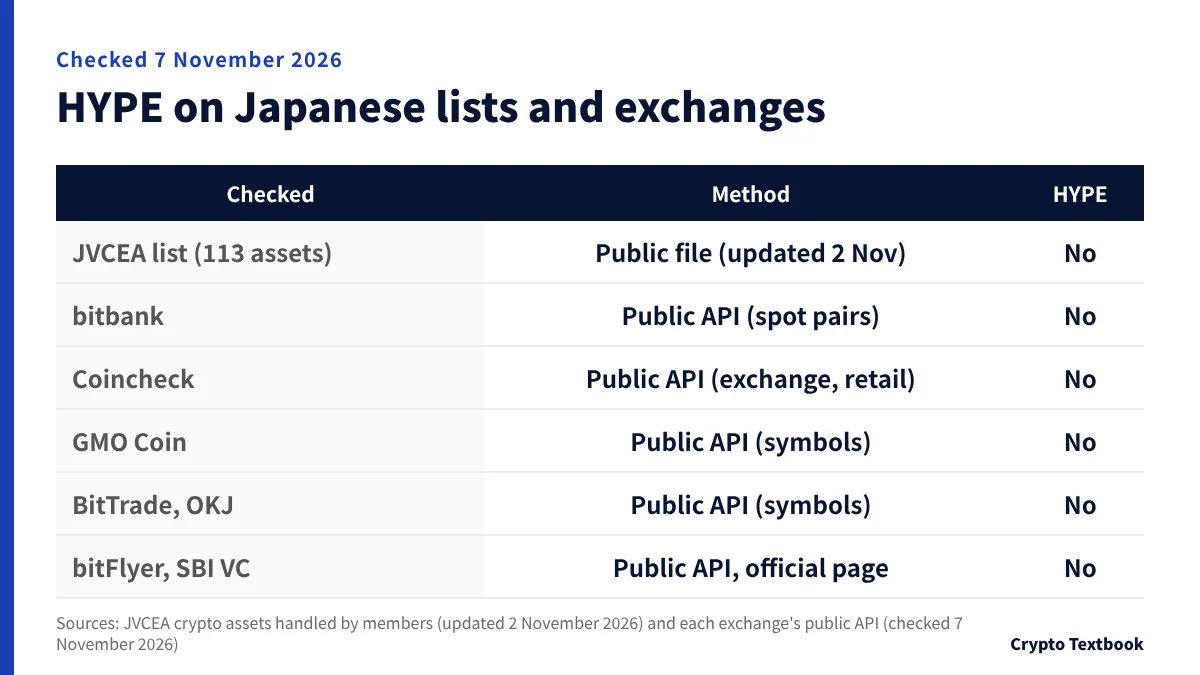
The JVCEA publishes the crypto assets these exchanges handle, with a Japanese-language description of each. The list updated on 2 November 2026 has 113 assets, and HYPE is not among them.
When a member starts handling a new asset, the JVCEA publishes a notice of the new listing. The most recent was Mantle (MNT), which members began handling on 31 October 2026.
| Checked | Method | HYPE |
|---|---|---|
| JVCEA members' crypto assets | Public file (updated 2 November) | No |
| bitbank | Public API (spot pairs) | No |
| Coincheck | Public API (exchange and retail rates) | No |
| GMO Coin | Public API (symbols) | No |
| BitTrade and OKJ | Public API (symbols) | No |
| bitFlyer | Public API (order book markets) | No |
| SBI VC Trade | Crypto assets page | No |
※ The JVCEA list covers all member exchanges, including Binance Japan, Rakuten Wallet and Zaif. We also checked individual exchanges to confirm the result twice.
Buying on an overseas exchange changes three things compared with a Japanese exchange.
- Registration: none of the three overseas exchanges covered here is registered with the Financial Services Agency
- User protection: the segregation, trust and audit duties imposed on registered exchanges (Article 63-11) do not apply
- Japanese documents: there is no JVCEA member description for HYPE
| Payment Services Act | What registered exchanges must do |
|---|---|
| Article 63-11(1) | Keep users' money separate from their own and place it in trust |
| Article 63-11(2) | Keep users' crypto separate from their own |
| Article 63-11(3) | Have that management audited regularly by a certified public accountant or audit firm |
| Article 63-19-2 | Users rank ahead of other creditors for the segregated crypto |
※ HYPE bought on an overseas exchange sits outside these rules. Proof of reserves or similar measures that an overseas exchange offers are not legal protection.
The Payment Services Act prohibits unregistered foreign providers from soliciting people in Japan (Article 63-22). Do not respond to anyone who approaches you individually on social media.
Can people in Japan use BingX? What the FSA register shows →
Where to buy HYPE: MEXC, BingX and Bitunix compared
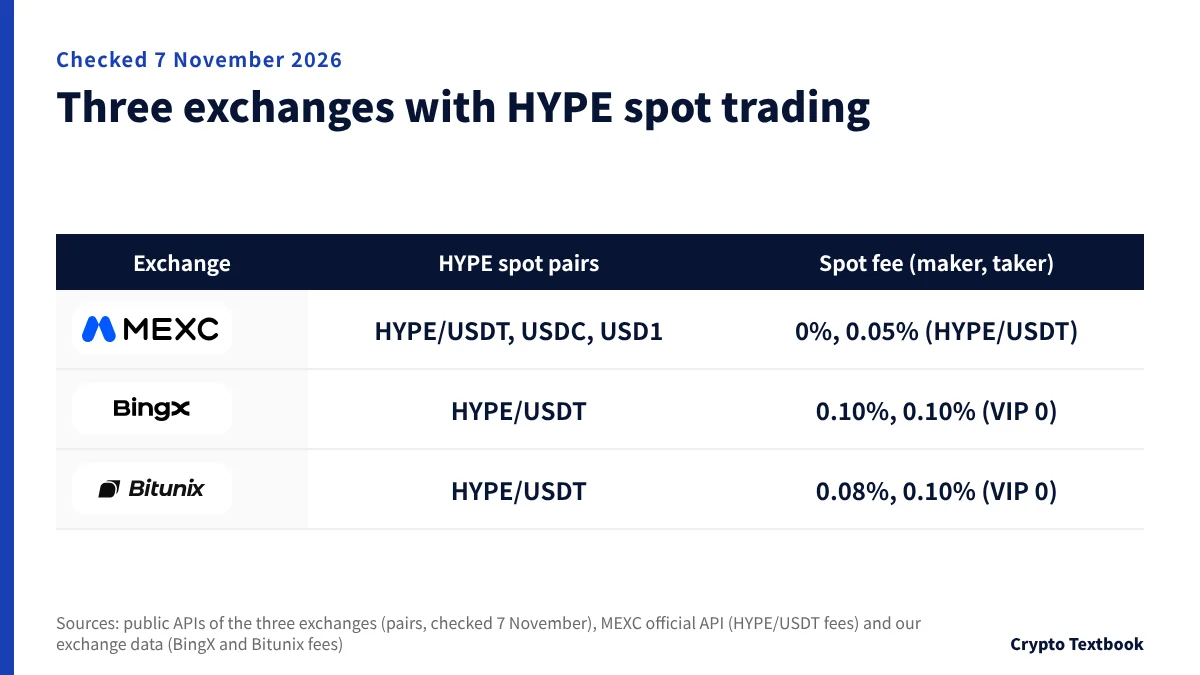
We checked all three public APIs on 7 November 2026 and confirmed that HYPE spot trading was open. The differences lie in the quote currencies and the fees.
| Item | MEXC | BingX | Bitunix |
|---|---|---|---|
| HYPE spot pairs | HYPE/USDT, HYPE/USDC, HYPE/USD1 | HYPE/USDT | HYPE/USDT |
| Spot fees | HYPE/USDT maker 0%, taker 0.05% | Maker 0.10%, taker 0.10% (VIP 0) | Maker 0.08%, taker 0.10% (VIP 0) |
| Japanese support | Japanese site, help centre and live support | Japanese site and help centre | Japanese site (help articles mostly in English) |
| 24-hour withdrawal limit | Not checked for this article | Unverified 20,000 USDT, advanced 5,000,000 USDT | KYC1 500,000 USDT, KYC2 5,000,000 USDT |
※ The MEXC fee is the HYPE/USDT value shown in its public API. The BingX and Bitunix fees are the base rates in our exchange data, not HYPE-specific values.
Our exchange data shows BingX was founded in 2018 and Bitunix in 2021. MEXC does not state its operating entity and place of registration uniformly on its official pages.
On MEXC's public API, HYPE trades against USDT, USDC and USD1. BingX explains how to buy HYPE on an official Japanese-language page.
In Bitunix's public API, the HYPE/USDT pair is labelled Hyperliquid. HYPER, with a similar ticker, is a different token (Hyperlane).
- For all three, the operating entity and registration have to be checked in each exchange's terms (our exchange data)
- All three offer futures with a forced liquidation system, which is not the same as negative balance protection
- All three have Japanese-language sites, but how they handle enquiries differs
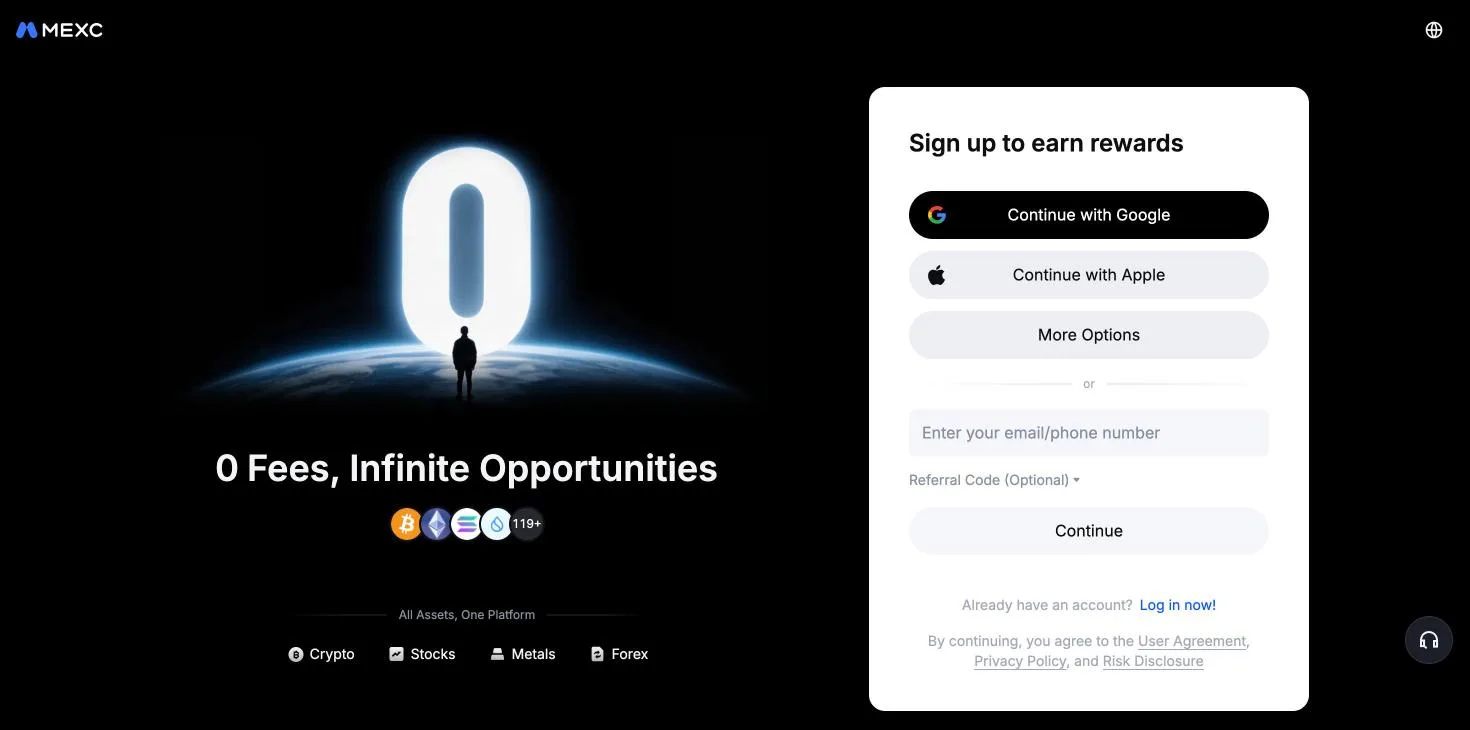
MEXC invitation code and sign-up steps →
BingX invitation code and sign-up: what to do if you forgot it →
Can you use them from Japan? Restricted regions of the three
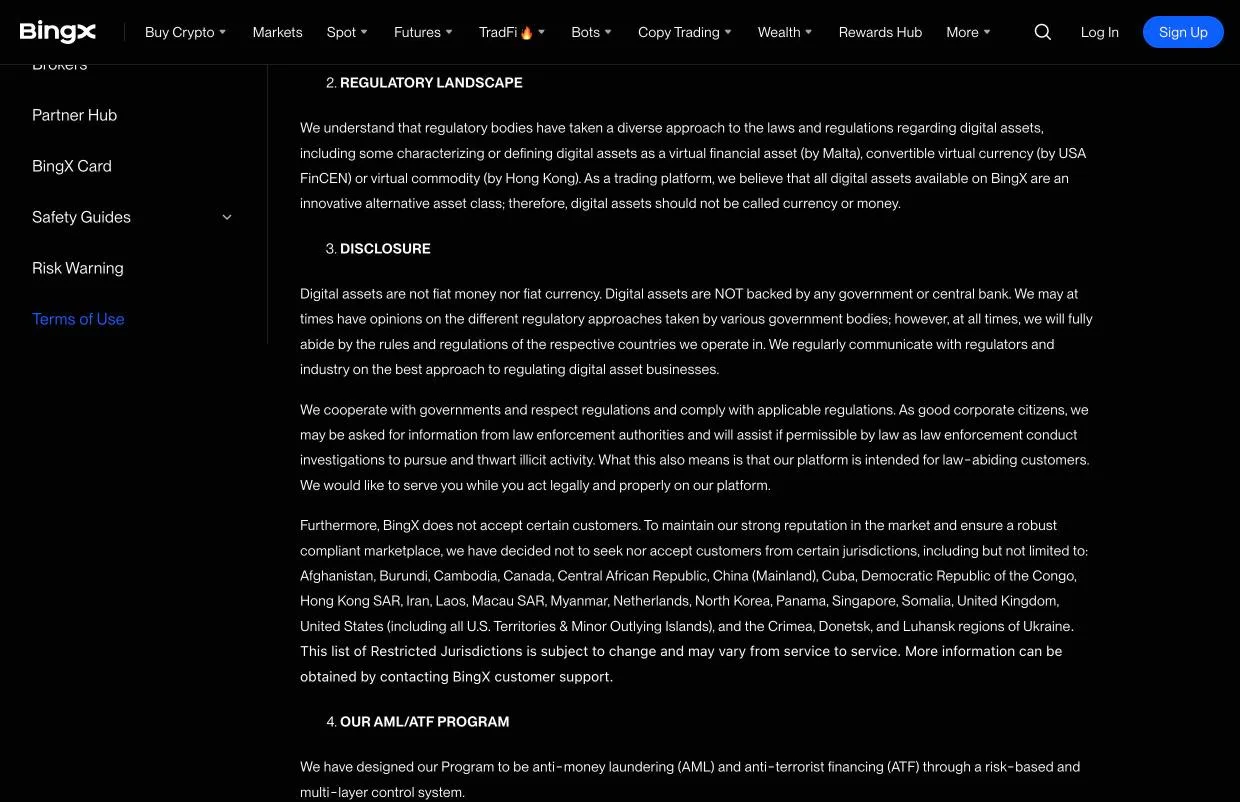
Overseas exchanges list the countries and regions they do not serve on their official pages. Japan was not on the BingX or Bitunix lists.
| Exchange | Official statement | Japan |
|---|---|---|
| BingX | Disclaimer (updated 11 December 2023) lists 21 countries and regions | Not listed |
| Bitunix | Restricted regions notice (updated 5 August 2026) lists the US, mainland China, Hong Kong, Singapore, France and others | Not listed |
| MEXC | Prohibited jurisdictions are set in the terms of use | Not checked for this article |
※ Both say the lists are examples and can change without notice. Whether you can actually use the service is decided by the sign-up screen and the app.
Bitunix's notice prohibits hiding your location with a VPN or similar tools. If detected, it says the account may be suspended and positions closed.
Japan not being on a restricted list does not make an exchange registered with the Financial Services Agency. Japanese user protection still does not apply, and the exchange's own support is your main point of contact if something goes wrong.
Bitunix review and safety: operator details and restricted regions →
How to buy HYPE on an overseas exchange: spot HYPE/USDT
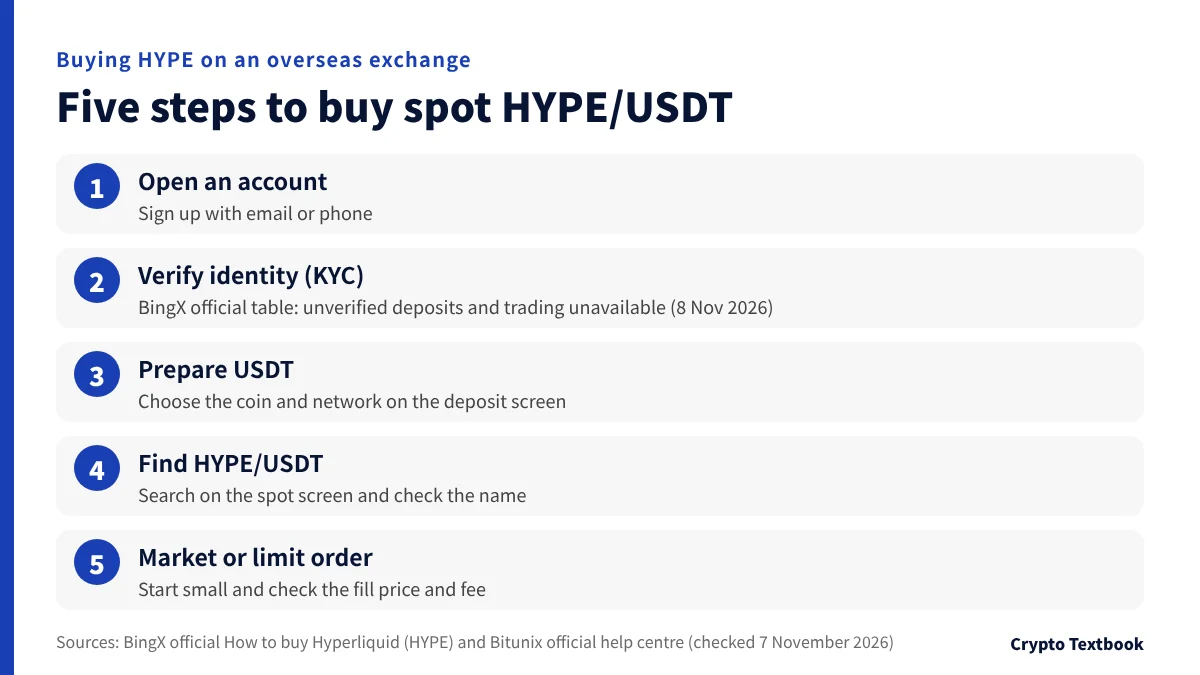
- 01Open an account
Sign up with an email address or phone number. The invitation code field is optional, and each exchange's column explains what happens if you leave it blank. Do not reuse passwords from other sites.
- 02Complete identity verification (KYC)
On BingX, the official table lists deposits and trading as unavailable for unverified accounts (checked 8 November 2026); check your account screen for the current treatment. Finishing KYC first means you will not get stuck after depositing. Your verification level also sets the 24-hour withdrawal limit.
- 03Prepare USDT
Swap crypto sent from a Japanese exchange into USDT, or deposit USDT directly. On the deposit screen, choose the coin and the network. Once it arrives, check that the funds are in your spot account.
- 04Find HYPE/USDT on the spot screen
Open the spot trading screen and search for HYPE/USDT. Check that the token name shows Hyperliquid.
- 05Place a market or limit order
Use a market order to buy now, or a limit order to wait for your price. Enter the quantity and confirm the order. The HYPE you bought appears under your spot assets.
| Exchange | Steps in the official guide |
|---|---|
| BingX | Go to the spot trading screen, search HYPE/USDT, enter the quantity, choose market or limit, confirm |
| Bitunix | Select Spot in the top bar, pick the pair in the left search bar, enter the quantity with Market Order, click Buy |
| MEXC | HYPE/USDT spot confirmed through the public API. Check the official help centre for the screen steps |
※ We could not retrieve MEXC's official help article on spot trading this time, so we list only facts confirmed through its public API.
BingX's official page also explains buying USDT first through Quick Buy (cards) or P2P. Check the supported regions and fees on BingX's own screens.
| Order type | How it fills | When to use it |
|---|---|---|
| Market | Fills right away at the current market price | When you want to buy now |
| Limit | Placed at a price you set | When you want to set your buying price |
※ A limit order does not fill unless the price reaches your level. Check your order history to see whether it is still open.
When the order book is thin, a market order can fill at a worse price than displayed. Place a small first order and check the fill price and fee before buying more.
Open the MEXC sign-up page (our invitation link) →
Sending from a Japanese exchange: check the destination and network
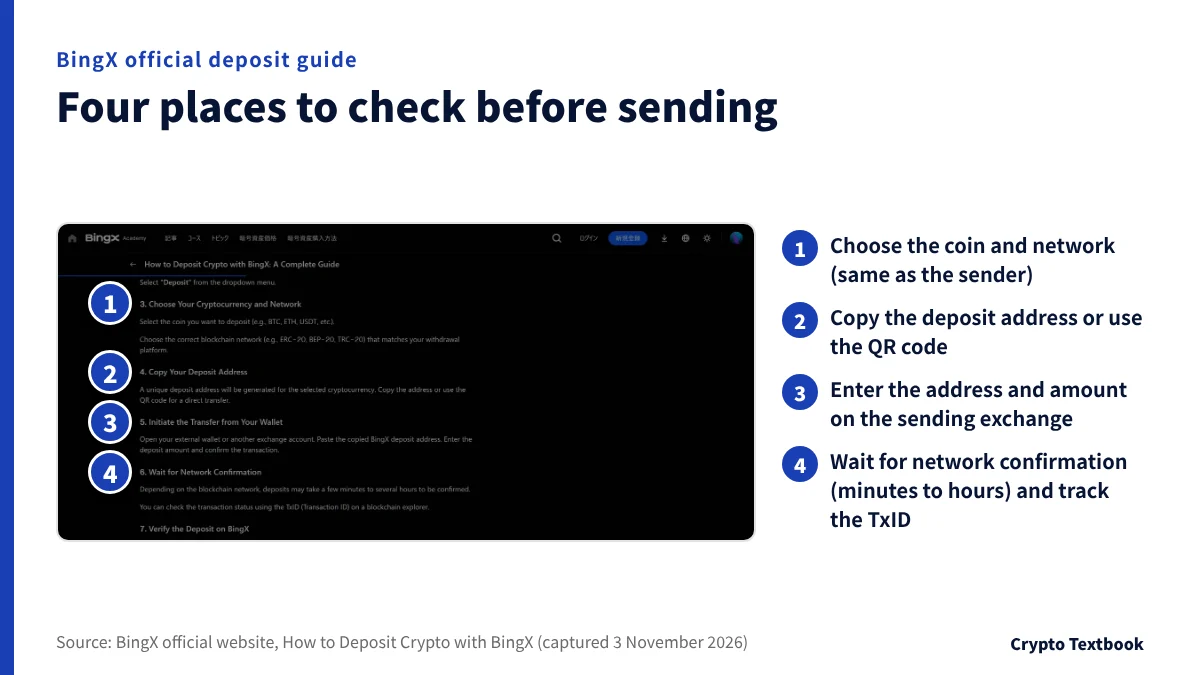
What you send from Japan is not HYPE but an asset both sides handle. The JVCEA list includes XRP, BTC and ETH, but not USDT.
On the same list, 30 members handle BTC, 29 handle ETH and 20 handle XRP (updated 2 November 2026). Check that the asset you send is handled by both your Japanese exchange and the receiving overseas exchange.
| Stage | What to do | Common sticking point |
|---|---|---|
| Asset | Choose an asset handled in Japan and overseas | USDT is not on the Japanese list |
| Destination | Check the Japanese exchange's list of allowed destinations | The travel rule rules out some destinations |
| Network | Choose the same network as the overseas deposit screen | A different network will not arrive |
| Address | Copy the address from the overseas deposit screen | Fill in any tag or memo field |
| Test | Send a small amount first, then the rest | Arrival takes minutes to hours |
※ Network names vary slightly between exchanges. Do not pick a similar-looking name; match the label on the receiving screen.
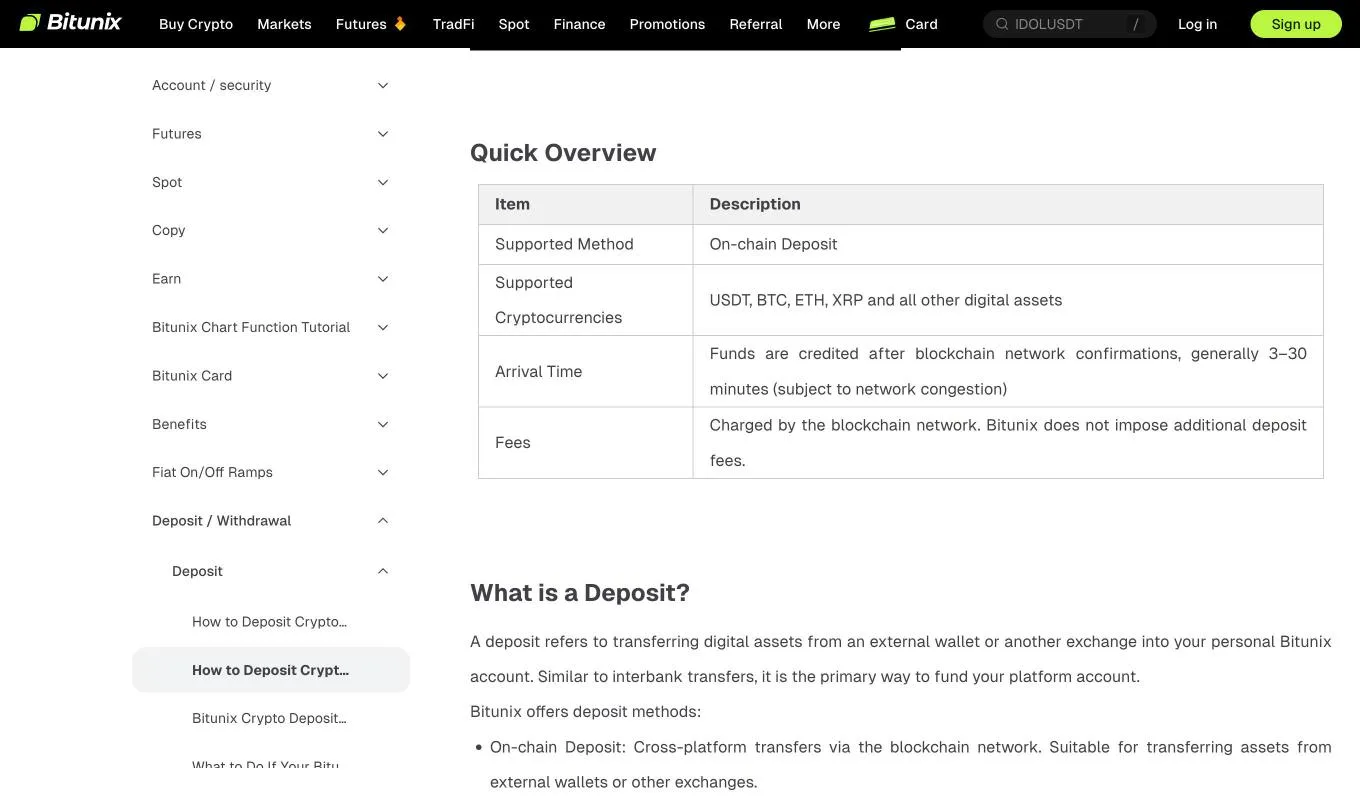
Bitunix's help centre says deposits are generally credited in 3 to 30 minutes, with no extra deposit fee. BingX says confirmation can take from a few minutes to several hours, depending on the network.
When you send crypto overseas from a Japanese exchange, you must provide details such as the receiving exchange. Which exchanges you can choose varies by Japanese provider.
Cannot send from a Japanese exchange overseas? How the travel rule works →
Sending HYPE safely: HyperCore, HyperEVM and fake tokens
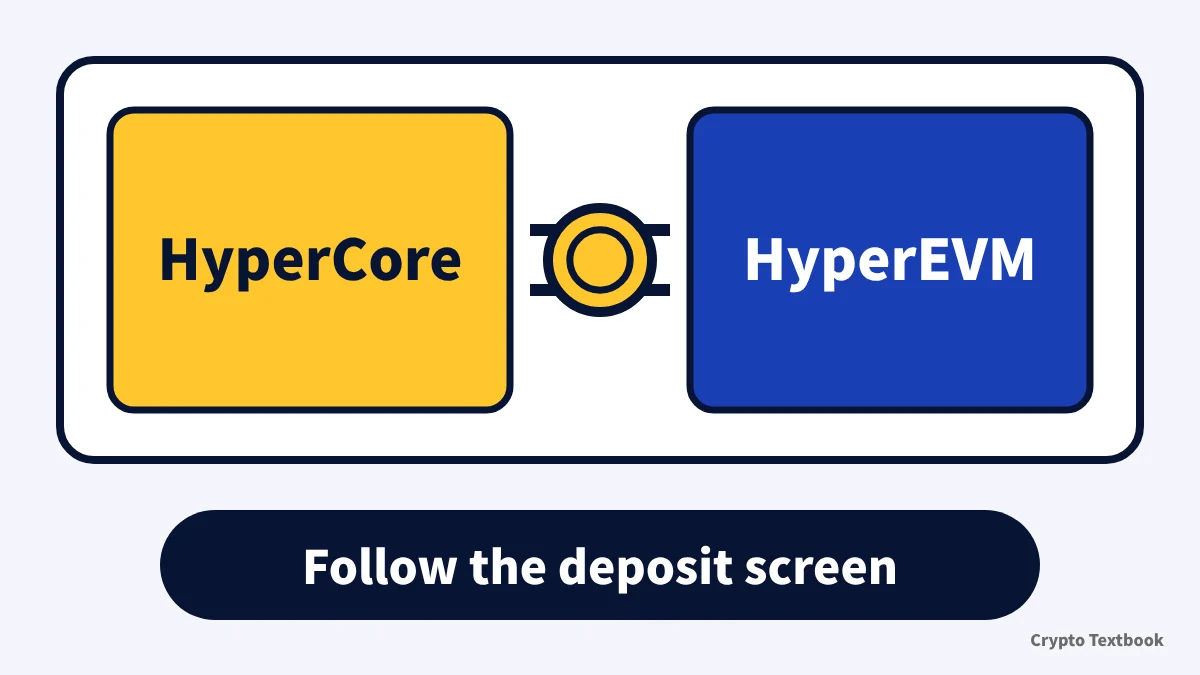
HYPE is used in two parts of the same chain: HyperCore, which runs the order books, and HyperEVM, which runs smart contracts.
On HyperEVM, HYPE pays gas fees. The official documentation gives the address of the wrapped version, WHYPE, as 0x555...5.
The official documentation describes HyperEVM as still in the alpha stage. To stake, HYPE on HyperEVM must first be moved to your spot balance on HyperCore.
| What to check | Official information |
|---|---|
| HYPE token ID | 0x0d01dc56dcaaca66ad901c959b4011ec (official API) |
| WHYPE address | 0x555...5 (HyperEVM, as written in the official documentation) |
| Exchange deposits | Match the network name on the sending and receiving sides |
| Wallets | Never give your private key or seed phrase to anyone, including support staff |
※ WHYPE makes HYPE easier to use in HyperEVM apps. If you are only moving HYPE bought on an exchange, you normally do not need it.
Hyperliquid lets anyone list a new token without permission (HIP-1). The official documentation warns that the name shown on screen can differ from the on-chain ticker.
Hyperliquid's official support guide advises treating sponsored search links and most DMs with suspicion. It says opening frequently used sites from bookmarks is safer.
- Never enter your seed phrase or private key on a website or give it to anyone claiming to be support
- Read what you are signing, and do not sign if your wallet shows a warning
- Do not download unknown apps or PDFs
- If you see transactions you did not make, stop using that address and move what is left to a new wallet
Selling HYPE and getting back to Japanese yen
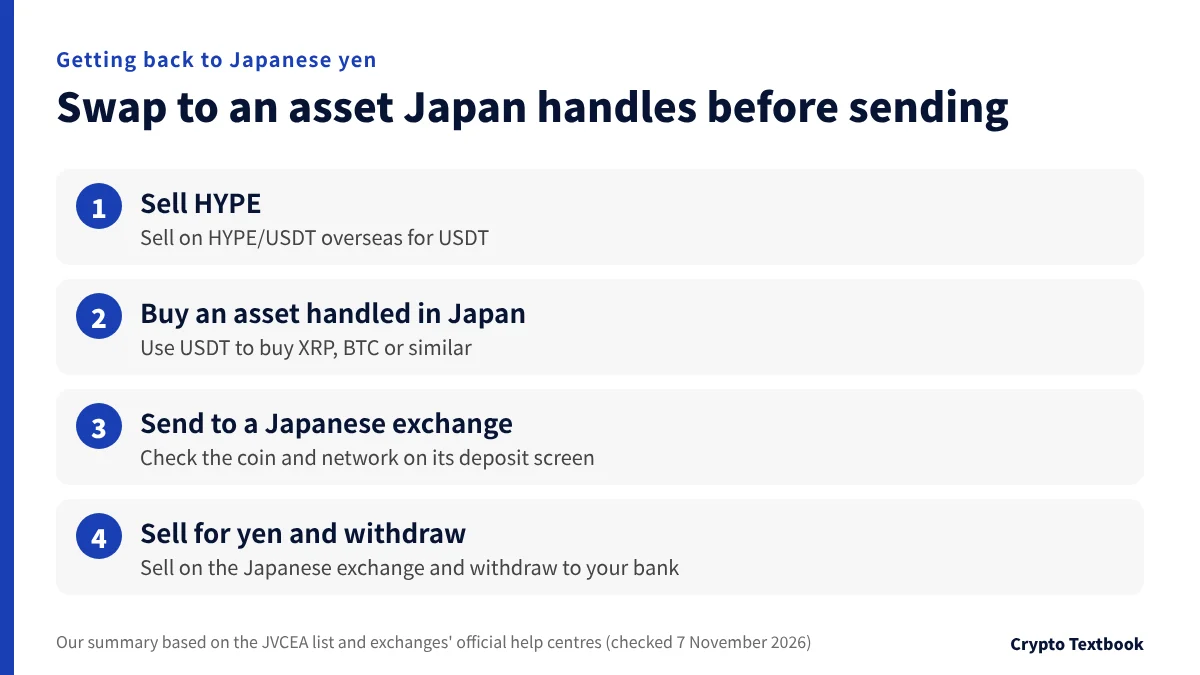
As of 7 November 2026, Japanese exchanges do not handle HYPE, so you cannot send it there directly. Sell it overseas, swap to an asset handled in Japan, then send that.
| Order | Where | What to do |
|---|---|---|
| 1 | Overseas exchange | Sell HYPE on HYPE/USDT for USDT |
| 2 | Overseas exchange | Use USDT to buy an asset handled in Japan, such as XRP or BTC |
| 3 | Overseas to Japan | Send it to the Japanese exchange's deposit address |
| 4 | Japanese exchange | Sell for yen and withdraw to your bank account |
※ Which assets and networks a Japanese exchange accepts varies by provider. Check its deposit screen before sending.
- Whether the network you withdraw on appears on the Japanese exchange's deposit screen
- The minimum withdrawal and withdrawal fee shown on the withdrawal screen
- The 24-hour withdrawal limit for your verification level
The National Tax Agency FAQ says income must be calculated even when one crypto asset is exchanged for another (Q1-3). Steps 1 and 2 in the table each create a gain or loss at that point.
For example, selling HYPE for USDT and then buying XRP with that USDT is two exchanges. Selling the XRP for yen in Japan is a third. Recording the date, quantity and yen value of each trade makes the later calculation easier.
Unverified BingX accounts can withdraw only 20,000 USDT per 24 hours. Raise your verification level before moving a large amount back.
Bitunix allows withdrawals of up to 500,000 USDT per 24 hours at KYC1 and 5,000,000 USDT at KYC2. Withdrawal fees and minimums are listed by network on its official fee page.
MEXC deposits and withdrawals: yen quick buy and withdrawal flow →
Common mistakes when buying and sending HYPE, and fixes
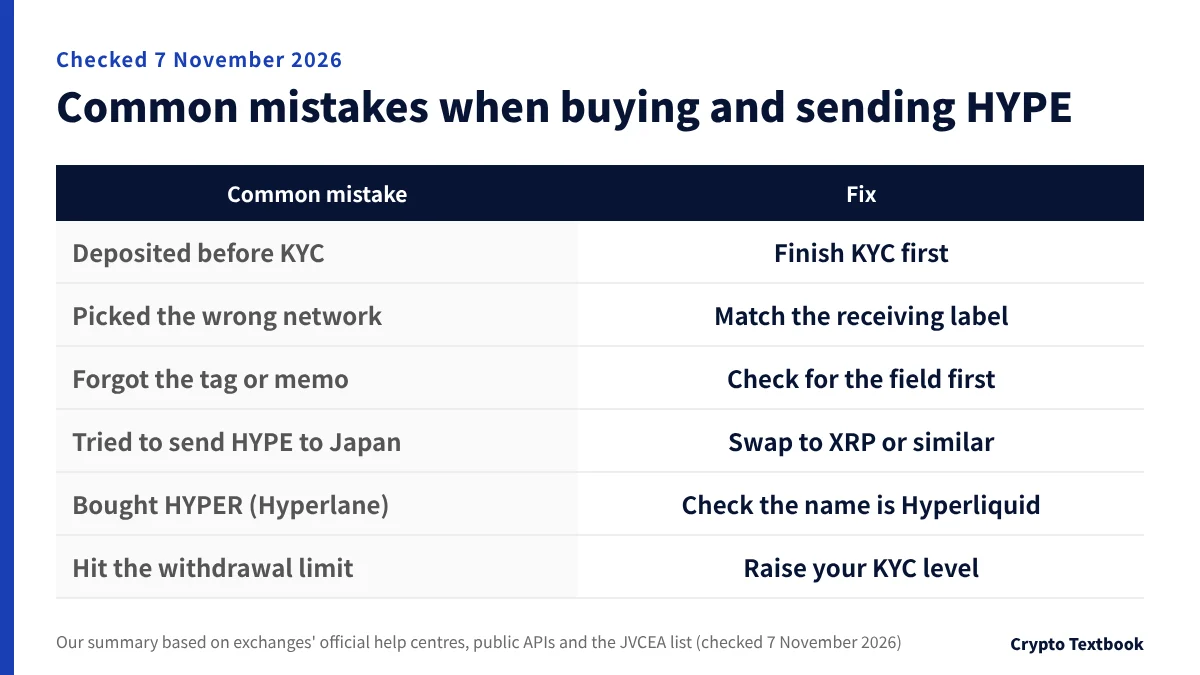
The places people get stuck on overseas exchanges are predictable. Most can be avoided by checking one thing before sending.
| Common mistake | What happens | Fix |
|---|---|---|
| Deposited before KYC | On BingX, deposits and trading are unavailable for unverified accounts per the official table (checked 8 November 2026) | Finish KYC first |
| Picked the wrong network | A transfer on a different network does not arrive | Match the label on the receiving screen |
| Forgot the tag or memo | The deposit is not credited to your account | Check for the field before sending |
| Tried to send HYPE to Japan | Japanese exchanges cannot receive HYPE | Swap to XRP or similar overseas, then send |
| Bought HYPER by mistake | You bought a different token, Hyperlane | Check the name shows Hyperliquid |
| Hit the withdrawal limit | Unverified BingX accounts are capped at 20,000 USDT per 24 hours | Raise your verification level in advance |
※ If a deposit is not credited, keep the transaction ID (TxID) and contact the receiving exchange's support.
Tokens with similar tickers also appear in MEXC's and Bitunix's public APIs. HYPERUSDT on MEXC and HYPER (Hyperlane) on Bitunix trade as tokens separate from HYPE.
BingX identity verification (KYC) and limits for unverified accounts →
Hyperliquid itself (the DEX) and staking: how it differs from an exchange
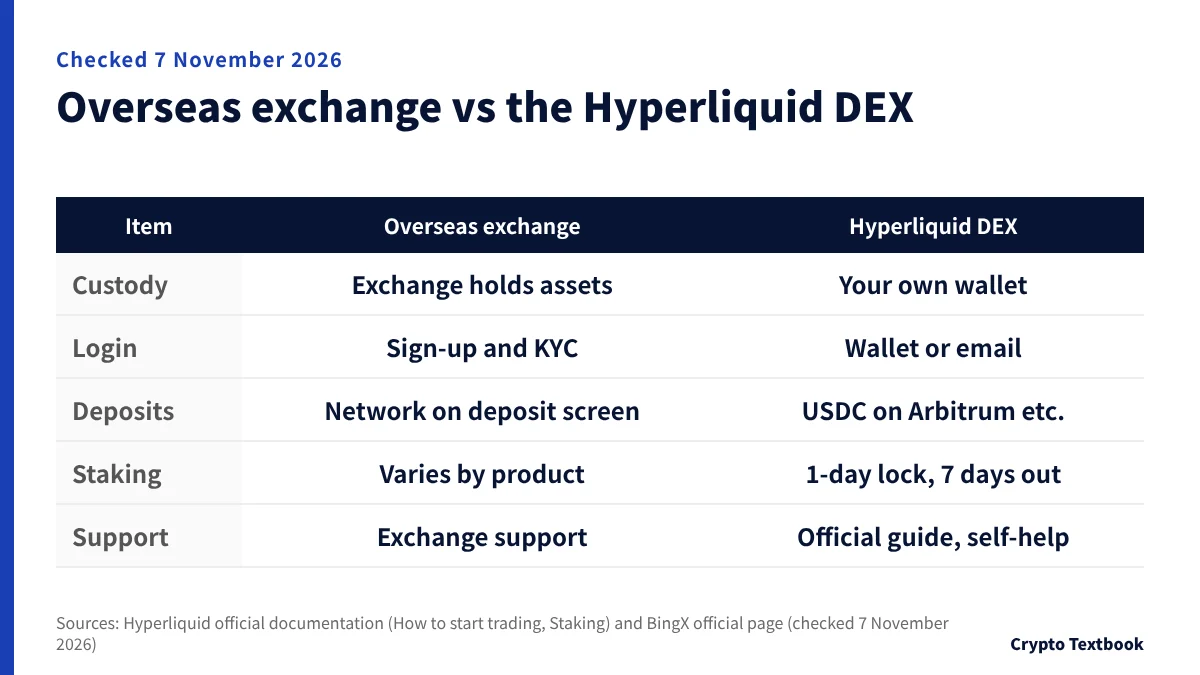
Spot HYPE also trades on Hyperliquid's own exchange (the DEX). This is a different set-up from the overseas exchanges above: you hold the assets in your own wallet.
The official website describes Hyperliquid as best known for perpetual futures and spot trading. An order placed on the futures screen is a leveraged trade. There is no support desk either, so we do not suggest that first-time buyers use the DEX.
The official documentation (How to start trading) describes three steps.
- 01Connect a wallet or email
Use Connect on app.hyperliquid.xyz. With email you log in with a 6-digit code; with a wallet you sign Enable Trading.
- 02Deposit USDC or similar
Send USDC on Arbitrum or another listed route through Deposit. BTC, SOL and some other assets can also be deposited and traded for USDC on Hyperliquid.
- 03Buy HYPE on spot
HYPE spot trades against USDC and other quote assets such as USDT0 (official API). The official documentation says trading itself is gas-free.
| Item | Overseas exchange (CEX) | Hyperliquid (DEX) |
|---|---|---|
| Custody | The exchange holds your assets | Your own wallet (private key) |
| Login | Sign up by email and verify identity | Connect an EVM wallet or use email |
| Deposits | Use the network on the deposit screen | Official routes such as USDC on Arbitrum |
| Staking | Terms vary by exchange product | 1-day lock to stake, 7 days to withdraw |
| If something goes wrong | Contact the exchange's support | Follow the official guide yourself |
※ On the DEX, anyone who knows your private key can move your assets. The official guide says self-custody is the user's responsibility.
According to the official documentation, staking HYPE to a validator carries a 1-day lockup. Moving HYPE from the staking balance back to spot takes 7 days.
The reward rate depends on total HYPE staked and is about 2.37% a year at 400 million HYPE. Exchange staking products have their own terms, so check each exchange's screen.
- Rewards accrue every minute, are distributed daily and are automatically redelegated to the same validator
- Becoming a validator requires a 10,000 HYPE self-delegation, locked for one year
- A validator cannot raise its commission unless the new rate is 1% or less
- Each address can have at most 5 pending withdrawals in the unstaking queue
The National Tax Agency FAQ says crypto received through staking is counted as income at its market value when received (Q1-7).
HYPE tax in Japan: gains are miscellaneous income in principle
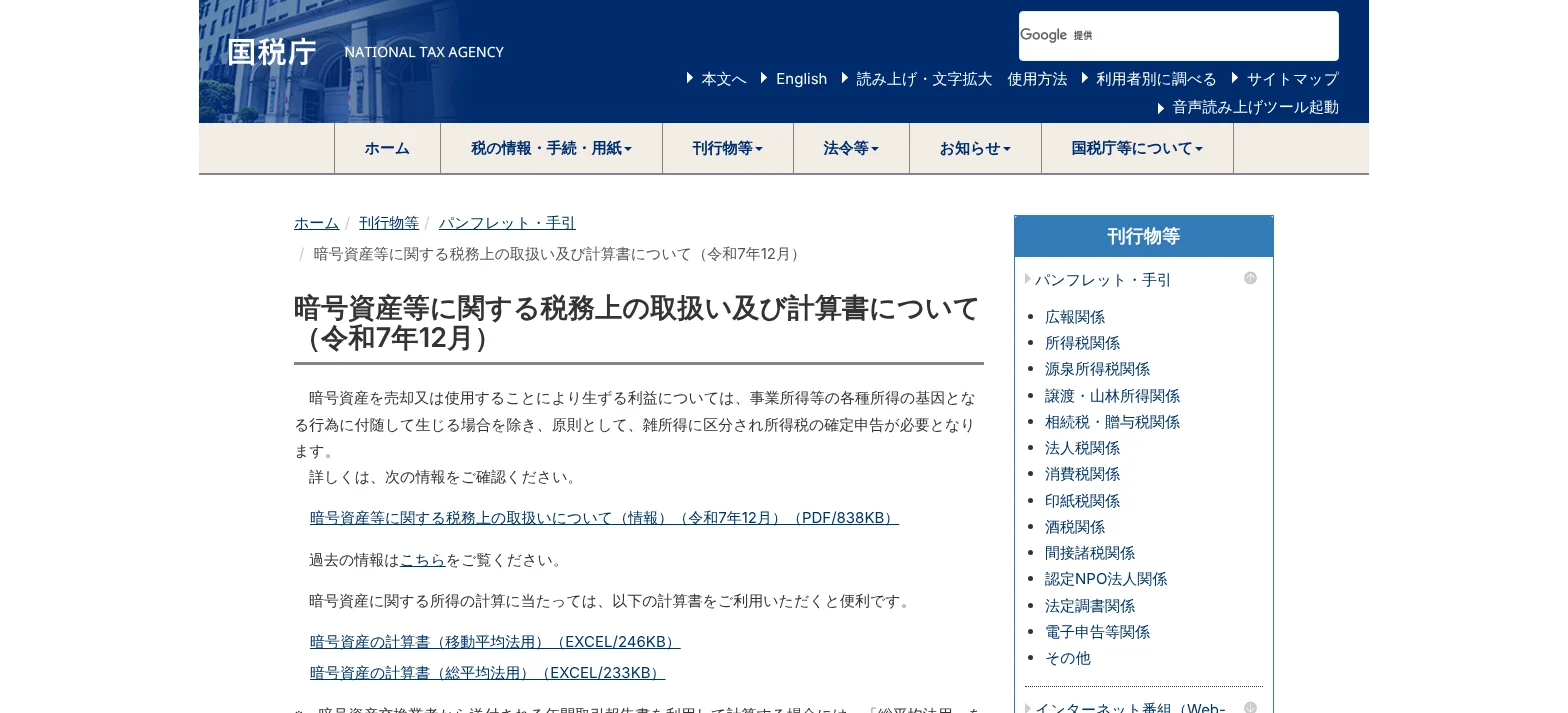
Gains from selling or swapping HYPE are subject to income tax and are, in principle, classed as miscellaneous income (National Tax Agency FAQ Q2-2).
| Situation | Treatment in the National Tax Agency FAQ |
|---|---|
| Selling HYPE for USDT | Income calculated as a crypto-to-crypto exchange (Q1-3) |
| Buying XRP with USDT | Also calculated as an exchange (Q1-3) |
| Selling for yen in Japan | Income from the sale is calculated (Q1-1) |
| Staking rewards | Market value when received is income (Q1-7) |
| Making a loss | Cannot be offset against salary or other income (Q2-11) |
※ Acquisition cost is calculated with either the total average or the moving average method. Individuals who do not choose use the total average method (note to Q1-3).
| National Tax Agency FAQ Q1-3 example | Amount |
|---|---|
| 2 April: buy 4 BTC for 4,000,000 yen | 1,000,000 yen per BTC |
| 2 November: buy 40 XRP with 1 BTC (1 XRP = 30,000 yen) | XRP purchase value 1,200,000 yen |
| Income (1,200,000 yen minus 1,000,000 yen) | 200,000 yen |
※ The FAQ figures are hypothetical and exclude trading fees. Exchanging HYPE for USDT is calculated the same way.
FAQ Q2-7 covers trades on overseas exchanges. It asks you to confirm what you paid and received from your trade history and the market prices published by exchanges. Keep your own records of orders and transfers.
The same Q2-7 allows 5% of the sale price to be used as the acquisition cost when it is unknown. For a sale of 5 million yen, that is 250,000 yen.
The amount you owe depends on your total income and deductions. Check individual figures with a tax accountant or the tax office.
Crypto tax basics (beginner guide) →
How to file tax on overseas exchange crypto: calculation and payment →
Risks to check before buying HYPE
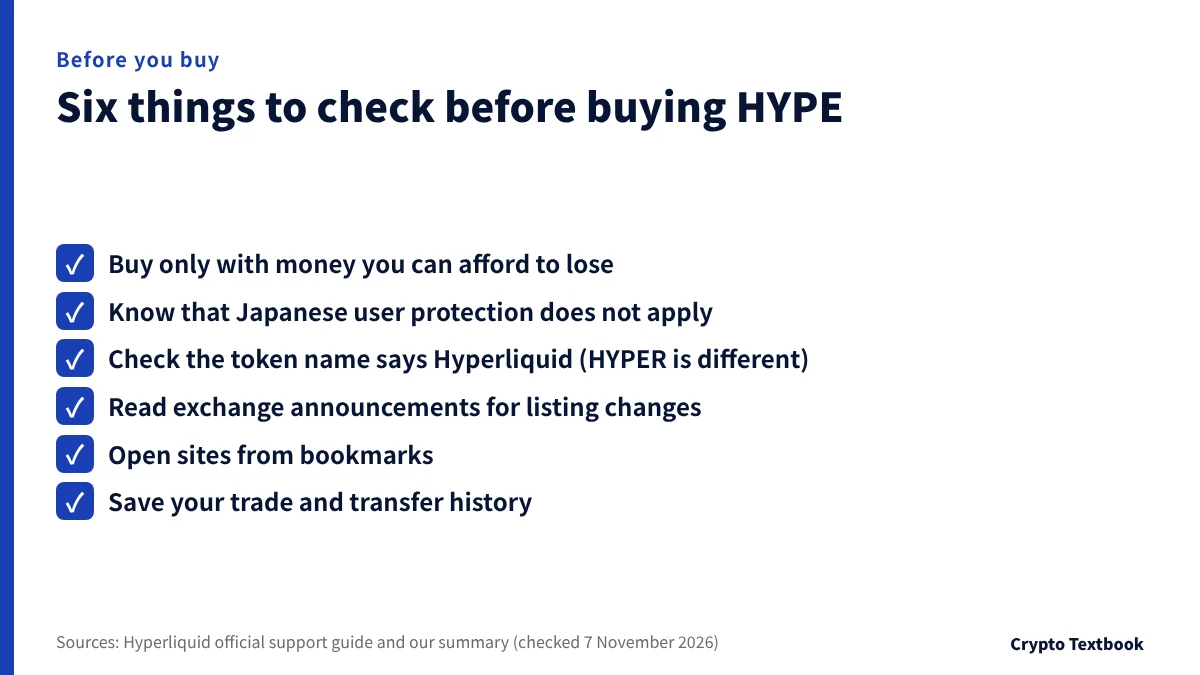
| Risk | What it means | How to check |
|---|---|---|
| Japanese protection | Exchanges not registered with the FSA are outside the Payment Services Act's segregation rules | Use only money you can afford to lose |
| Price swings | Crypto can fall sharply in a short time | Start with a small amount |
| Order book depth | In quiet hours, market orders can fill at worse prices | Use limit orders and watch the book |
| Delisting | Overseas exchanges can stop handling a token | Read the exchange's announcements |
| Fake sites and tokens | Search ads and DMs can lead to fake sites; tokens such as HYPER (Hyperlane) have similar tickers | Open sites from bookmarks and check the token name |
| Operator details | The operating entity and registration of an overseas exchange must be checked in its terms | Check our exchange pages |
| Regulatory change | Overseas exchanges have ended services for Japanese residents before | Read our exit column |
| Unstaking wait | On Hyperliquid itself, returning HYPE to spot takes 7 days | Do not stake what you may sell soon |
※ Most of these apply to buying any crypto on an overseas exchange, not only HYPE. Points specific to HYPE are covered in the transfer and common mistakes sections.
The official API shows circulating supply at about 30% of total supply (about 301.82 million HYPE). A further 410.12 million HYPE or so is recorded separately as future emissions.
The official website describes buying back and burning HYPE with protocol revenue. That is the project's own explanation, not a promise that the price will not fall.
Hyperliquid's official documentation is in English. There is no Japanese summary comparable to a JVCEA description.
When do Bybit and Bitget leave Japan? Withdrawal deadlines →
Our verdict: which route fits you
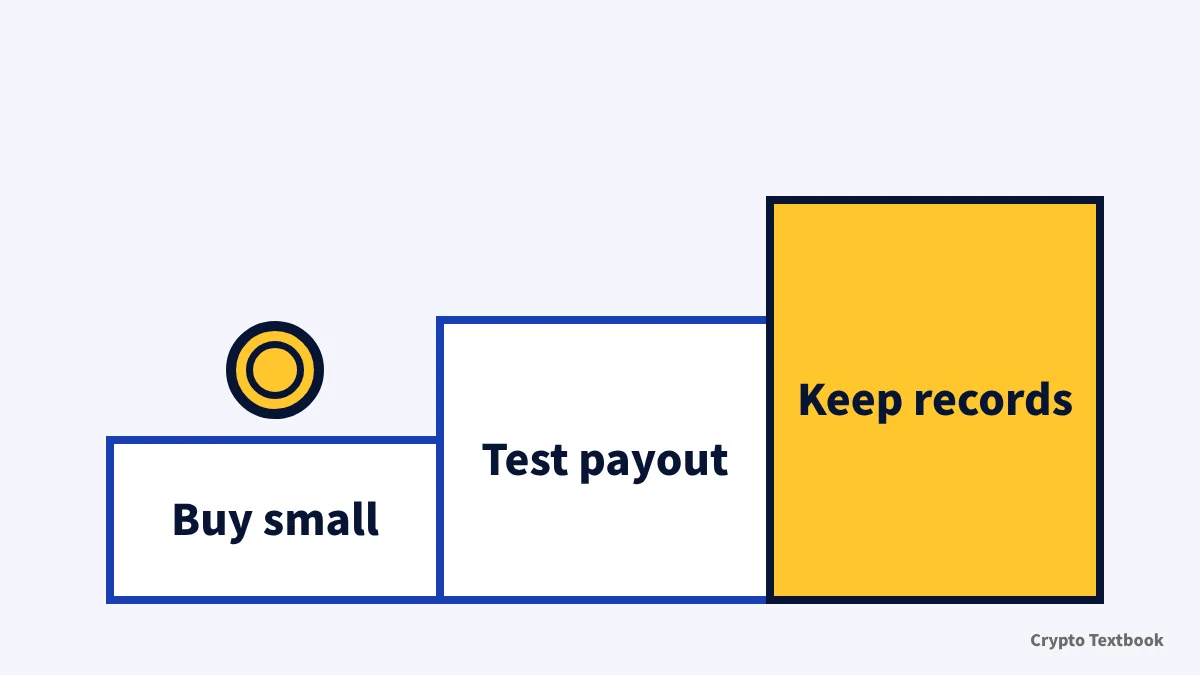
Within what we checked, Japanese exchanges do not handle HYPE, so the routes are the spot market of an overseas exchange or the Hyperliquid DEX. Both sit outside Japanese user protection, so decide based on money you can afford to lose.
On the Hyperliquid DEX you keep your own private key and check every destination yourself. There is no support desk, and mistakes cannot be undone.
- If Japanese-language guidance matters most: buy a small amount on BingX or MEXC and test a withdrawal once
- If you want lower HYPE/USDT fees: compare MEXC, whose public API showed a 0.05% taker fee
- If you already hold XRP or BTC in Japan: send a small part and run through arrival and a purchase once
If Japanese protection matters most, you can choose from the 113 assets handled by registered Japanese exchanges instead of HYPE.
This summarises official information and public API checks as of 7 November 2026. It is not a price outlook or a trading recommendation. We have advertising relationships, and crypto trading can lose your principal.
Frequently asked questions
Q. Where can I buy HYPE (Hyperliquid)?
A. As of 7 November 2026, MEXC, BingX and Bitunix offer spot HYPE/USDT. You can also buy on the Hyperliquid DEX, but you then manage the assets in your own wallet. Neither is registered with the Financial Services Agency, so Japanese user protection does not apply.
Q. Can I buy HYPE on a Japanese exchange?
A. Not within what we checked. HYPE is not on the JVCEA members' list (updated 2 November 2026). We did not find it in the public APIs of major Japanese exchanges either.
Q. How do beginners buy Hyperliquid?
A. Open an account on an overseas exchange and verify your identity. Send XRP or similar from a Japanese exchange, swap it to USDT and place an order on spot HYPE/USDT. Start with a small amount and run through the transfer and purchase once.
Q. What is the minimum amount to buy HYPE?
A. Minimum order sizes vary by exchange. BingX's public API showed a minimum order of 1 USDT for HYPE-USDT (7 November 2026). Transfer fees from Japan also apply, so with very small amounts the fees take a larger share.
Q. Can I send HYPE to a Japanese exchange?
A. Within what we checked, Japanese exchanges do not handle HYPE, so they cannot receive it. Sell HYPE overseas and swap to an asset handled in Japan, such as XRP, before sending. Accepted networks vary by Japanese provider, so check its deposit screen first.
Q. How do I convert HYPE to Japanese yen?
A. Sell HYPE for USDT overseas, use USDT to buy an asset handled in Japan, send it to a Japanese exchange and sell it for yen. Each swap creates a gain or loss, so record the date and yen value of every trade.
Q. Is HYPE taxed in Japan?
A. Yes. Under the National Tax Agency FAQ, gains from crypto trading are miscellaneous income in principle. Swapping one crypto asset for another, such as HYPE for USDT, also requires an income calculation. Losses cannot be offset against salary or other income.
Q. How can I spot fake HYPE tokens or scam sites?
A. Use only the network shown on the exchange's deposit screen and do not rely on the name alone. Hyperliquid's official support guide advises suspicion of search ads and DMs and opening sites from bookmarks. Never give your seed phrase to anyone, even if they claim to be support.
Sources
- Hyperliquid | Official website (home, FAQ, Tech and About pages, checked 7 November 2026) →
- Hyperliquid Docs | Staking (official documentation, checked 7 November 2026) →
- Hyperliquid Docs | HyperCore Overview (consensus, latency and throughput, checked 7 November 2026) →
- Hyperliquid Docs | How to start trading (connecting and depositing, checked 8 November 2026) →
- Hyperliquid Docs | Wrapped HYPE (official documentation, checked 7 November 2026) →
- Hyperliquid Docs | I got scammed/hacked (official support guide, checked 7 November 2026) →
- Hyperliquid official API | tokenDetails (HYPE maximum, total and circulating supply, retrieved 7 November 2026 23:30 JST) →
- Japan Virtual and Crypto assets Exchange Association (JVCEA) | Crypto assets handled by members and their descriptions (updated 2 November 2026, checked 7 November 2026) →
- Financial Services Agency of Japan | List of registered crypto-asset exchange service providers (as of 30 September 2026, PDF, checked 7 November 2026) →
- e-Gov | Payment Services Act of Japan (Articles 63-2, 63-11, 63-19-2 and 63-22, checked 7 November 2026) →
- MEXC official API | exchangeInfo (HYPEUSDT, retrieved 7 November 2026) →
- BingX | How to buy Hyperliquid (HYPE) (official, checked 7 November 2026) →
- BingX | Disclaimer (restricted jurisdictions, updated 11 December 2023, checked and captured 4 November 2026) →
- Bitunix | Restricted Regions and User Eligibility Notice (updated 5 August 2026, checked 3 November 2026) →
- Bitunix | How to complete spot trading on Bitunix (Web) (official help centre, updated 8 October 2026, checked 7 November 2026) →
- National Tax Agency of Japan | FAQ on the tax treatment of crypto assets (26 December 2025, Q1-1, 1-3, 1-7, 2-2, 2-7 and 2-11) →
FX Textbook is an independent information site, not an exchange or a provider of personal investment advice. Crypto-asset trading involves risk: price volatility, liquidation of leveraged positions, transfer mistakes and the operational risk of exchanges and service providers can cause you to lose some or all of your invested capital. No result is guaranteed.
NEXT STEP
Check the exchanges that list HYPE on our exchange pages.
We list fees, deposits, withdrawals and operator details from the official information we checked. Compare them before opening an account.
Exchanges related to this column
Fees, leverage, funding options and current offers are on each exchange page.